The Ultimate Inclusive Content Marketing Guide: Download Now
Learn how to create content that reaches your widest audience yet.
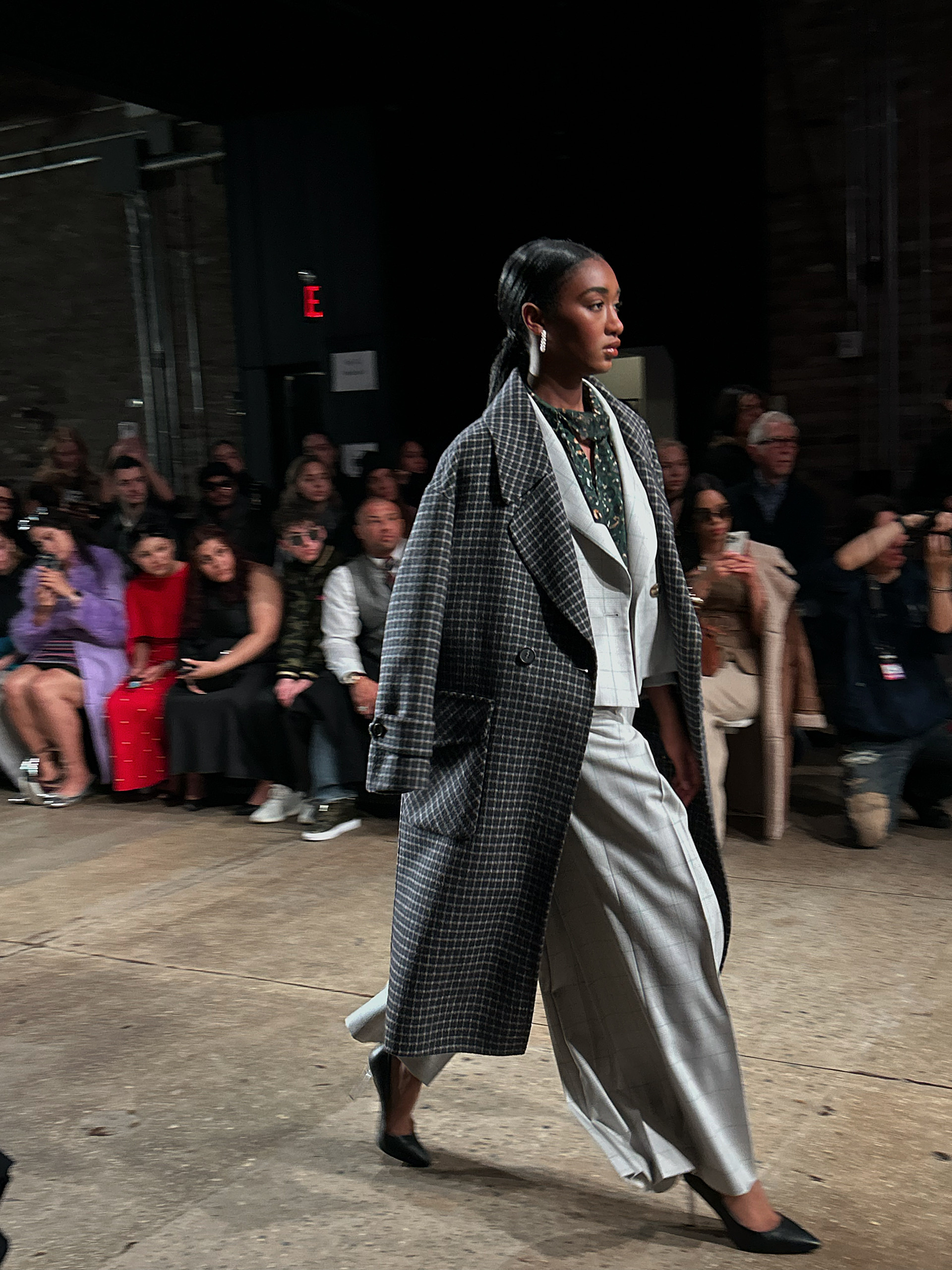
According to Coherent Marketing Insights, adaptive fashion is now worth a cool $18.5 billion and rising. And we can no longer afford to not take notice; Unhidden, the only adaptive fashion brand who is a member of the British Fashion Council (BFC) made an official debut on the London Fashion Week day agenda this year.
Showcasing a collection of adaptive fashion clothes, Unhidden’s new designs will be dropping in early next year. This is a growing fashion market, with brands such as Dewey, BraEasy and others also emerging. Mainstream fashion brands can no longer afford to ignore this consumer base; an estimated £2 billion is lost per month by businesses, owing to the lack of access afforded to Disabled people.
While other household names wait to come on board, companies such as Primark are finally playing ball, with the launch of Primark Adaptive earlier this year. Yet fashion shows, the forecaster for what consumers will be buying, are oftentimes not accessible. After attending the recent Unhidden fashion show at London Fashion week, and feeling included thanks to accessible arrangements for the very first time, as well as ‘seen’ as a consumer, it was clear that the industry has a lot to learn from brands like them.
Here’s how to create an accessible and inclusive fashion show:
To be inclusive, this means an invite may have to adapt its form and find the most accessible version for your attendees; braille may be needed, for instance, if you are inviting someone to your show with a visual disability. Giving enough time, too, also matters; commuting means having to take into account access needs, and an invite at the last minute may be impossible for a Disabled person to take on.
Nowadays, influencers are commonly seen at fashion shows, and if your brand is truly inclusive, it should also showcase that by the people you’re inviting. Having a diverse audience means you care about inclusivity and you want to engage with them as consumers.
One benefit of including disabled people that is not talked about enough is brand retention and loyalty; disabled journalists such as Lucy Webster, and influencers such as comedian Helena Moody have the ideal audience already. They can communicate your show to their readership easily and accessibly.
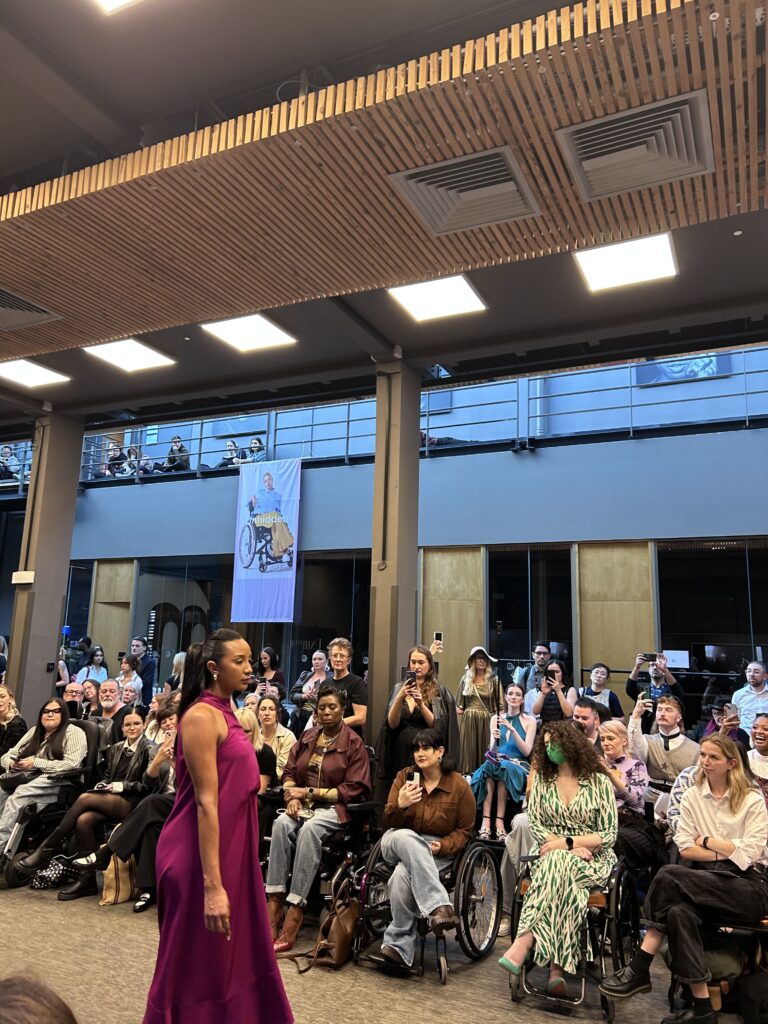
Is there a step-free entrance, and does this follow throughout the building? Is there more than enough room for more than just a single wheelchair to freely move around? Is there enough seating for each guest, and a way out in case of sensory issues needing to be regulated? Think about the access afforded by the environment; to be accessible means a good experience for all involved.
You can learn more about how to create an accessible event for everyone here.
Unhidden opened the debut of the Well Fair collection with Mallavora’s new single, Smile, an ensemble recorded specifically for the show, on repeat. A new metal band on the block with an album dropping next year, the song was the true zeitgeist for 2025, in taking aim at how Disabled people can be made to feel like a burden, while being told they are ‘inspirational’.
30 years since the Disability Discrimination Act and 15 since the Equality Act, an opening speech declared that “enough was enough”. It is a small gesture, but it signalled allyship to the disabled community from the second the show began.
Disability is not just elderly, nor is it singularly white. Frances Ryan has documented in her Guardian column that the ‘face’ of disability is becoming more ‘gen z’, as well as female, than ever before. Disability can affect anyone at any age through an accident, surgery, or even just ageing; there is a diversity of experience to be considered.
Unhidden has an in-house policy of specifically making sure there is an ‘equal distribution’ of models on all other characteristics; this was on show at their recent launch.
By this, we mean for fashion labels to consider wheelchair users and alternative presentations of how fashion can ‘look’. To be sat in a wheelchair presents a range of other hazards as a start point. Having a diverse range of models in your show is great, but it wouldn’t make sense to put them in clothes that don’t work with their bodies or their access aids, so make sure to keep that in mind when planning your show.
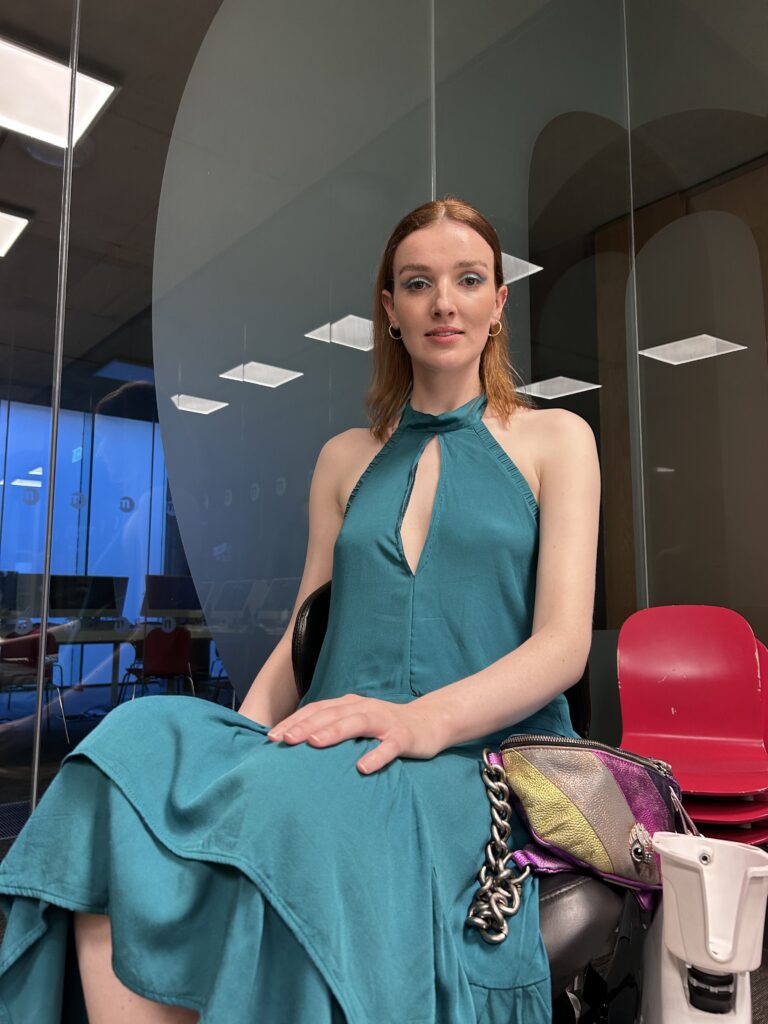
Following on from point five; disability is not just an experience lived in functional grey, black, or neutral white tones. Be free to experiment with colour, and do not be afraid to be bold. Disabled consumers wish to see more of this. From magenta to brown, Unhidden debuted a splash of colour options for the next collection.
Learning Disabled individuals are some of the most excluded individuals; for instance, 95% of learning disabled adults are unemployed, and it is not because of ‘not wanting’ to get into the workplace. One small measure of inclusion, to the benefit of everyone, would be to make the show schedule explicitly clear in plain, simple English. Consider having a schedule on display at the show, too. And even though this would also help, for example, Autistic individuals, having a clear agenda would actually be beneficial for everyone!
The new Unhidden collection is in part an homage to the events of this year, including the contentious Welfare Reform Bill that passed into law on July 1st. If you’re putting on a fashion show, consider the language used around disability. Person-first language (IE ‘person with a disability’) may be considered as offensive; some demographics also capitalise their condition name, to differentiate between a condition and a culture. Be aware of cultural conventions on disability and language.
Our Disability-Inclusive Language Guidelines article explains more about what language you could be using.
The debut of the Well Fair collection included placards, as well as other tiny yet bold details. Placards with political slogans were held by various models, while blister packs of the founder’s own were sewn into the model’s clothing. This immediately made for an attractive photograph on the day, too, by way of signalling inclusion to the mainstream.
Fashion shows can be a great opportunity for your brand to send a message to the industry and society.

To be shareable on social media allows for your message to be transmitted inclusively; having a designated hashtag is a simple measure you can undertake.
At a time when the rights of disabled people are under attack across the world, the Well Fair show caught something of an attention from a community typically overlooked; it was more than just a cultural comment, a moment in time. Inclusion is not a ‘niche’ issue, nor is it just a buzzword; this should be the standard conduct of the fashion industry, and for good reason.
The inclusion revolution is far from over; what else would you like to see from adaptive fashion brands? Let us know in the comments.
Want to make your brand’s events accessible and inclusive? Get in touch with the Purple Goat team to learn how inclusive marketing strategies can transform your reach.