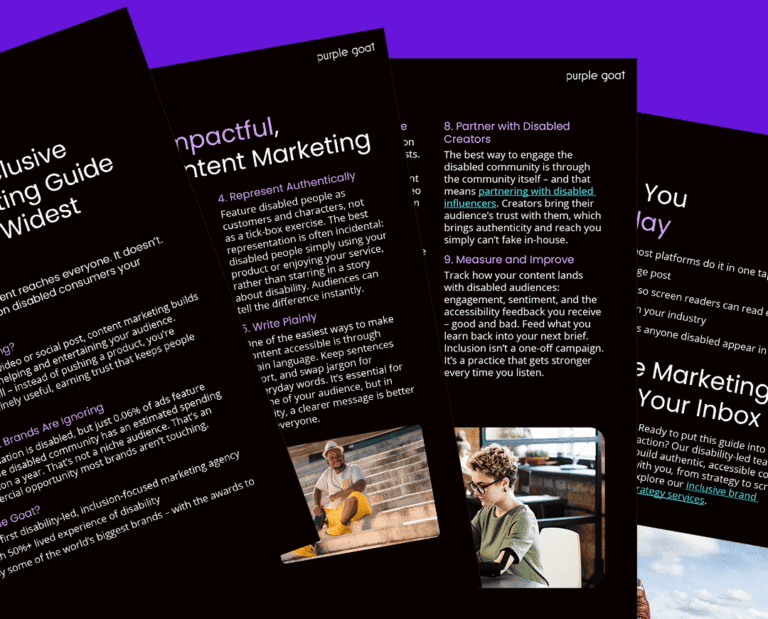
The Ultimate Inclusive Content Marketing Guide: Download Now
Learn how to create content that reaches your widest audience yet.

As the world moves towards a more inclusive and accessible future, language plays a critical role in shaping perceptions and fostering inclusivity. When it comes to disability, brands and organisations are often scared to say the wrong thing, and that sometimes stops them from doing anything at all, which shouldn’t be the case!
Using disability-inclusive language in marketing isn’t just about semantics, it’s about creating an environment where everyone feels respected and valued. Inclusive language ensures that disabled people are represented accurately and positively, which helps break down stereotypes and misconceptions.
At Purple Goat, we’re committed to guiding brands through using respectful, empowering language that reflects these values. In this guide, we’ll cover essential disability-inclusive language guidelines to help your campaigns and general marketing activities resonate with every audience. But if you want to learn more about how we can help your company specifically, make sure to get in touch!
Disability-inclusive language refers to words and phrases that talk about and represent disabled people respectfully and accurately, avoiding terms that might carry negative connotations, stigma, or assumptions. This approach goes beyond political correctness, aiming to use language that honours individual identities and respects personal preferences.
Adopting disability-inclusive language is essential for brands that want to foster genuine connections and build an image that values inclusivity. Brands that follow language guidelines help avoid unintentional harm or offence, as they have the power to influence societal norms.

Here’s a quick reference guide for disability-inclusive language that can transform your brand’s messaging:
| Language to Avoid | Language to Use |
| Able-bodied | Non-disabled |
| Handicapped | Disabled person |
| Wheelchair-bound | Wheelchair user |
| The disabled | The Disabled community |
| Crazy, insane or lunatic | Disabled person / Person with a mental health condition |
| Crippled | Disabled |
| Suffers from | Disabled person |
| Mentally handicapped | Disabled person / Person with an intellectual disability |
Using language that is precise and respectful helps your brand avoid outdated terminology, which can often come across as derogatory. It also reflects a deeper understanding of the disability community’s preferences and reinforces a commitment to inclusion.
Using respectful language is only one part of creating disability-inclusive content. Here are additional guidelines to keep in mind as you craft messages that resonate with all audiences.
Positive language emphasises what people can do, whereas negative language can emphasise limitations. For example, instead of saying “confined to a wheelchair,” try “wheelchair user” or “uses a wheelchair.” This helps reinforce the notion that assistive devices, such as wheelchairs, are tools for mobility and empowerment rather than limitations.
Everyday phrases we often use casually, such as “what’s wrong with you?” or “you’re so brave,” can have unintended connotations when used in contexts involving disabled people. For example:
When crafting messages, be aware of expressions that could carry unintended interpretations. Instead, focus on language that communicates empathy and authenticity.
There is a lot of nuance in the Disabled community, and preferences can be very diverse, with language preferences varying widely. For example, some Neurodivergent people prefer identity-first language (“Autistic person”), while others prefer people-first language (“person with autism”). Engaging with disability advocates or consulting directly with individuals within these communities can help your brand use language that aligns with the audience’s own preferences.
So often disabled people have been associated with ‘inspiration’. Calling a disabled person “inspirational” can be patronising, especially when it’s for everyday tasks, as it implies their lives are inherently difficult or tragic. This focus on their disability rather than their achievements reduces them to “overcoming” their condition, which reinforces stereotypes. Instead, it’s better to recognise people for their specific accomplishments, just as you would with anyone else.

Using inclusive language not only aligns your brand with values of inclusion and respect but also offers other great business benefits:
Inclusive language is more than a marketing technique, it’s an opportunity for brands to actively contribute to a more inclusive society.
If you want to understand the myths and misconceptions that fuel that fear around inclusive language, listen to Dom and Amanda answer Google’s most searched questions on disability straight from lived experience. You can also check out our top tips around inclusive language during the holiday season.
For brands looking to create disability-inclusive campaigns, workshops and training can be invaluable. At Purple Goat, we offer DEI training designed to make teams feel more confident around all things disability. These workshops provide interactive exercises, real-world examples, and a safe space to learn about the language that resonates best with the Disabled community. You can ask us anything!
Interested in making your brand more inclusive? Contact us to learn more about our DEI training!
“Disability” is generally an accepted and neutral term. Avoid euphemisms like “special needs,” which can seem dismissive or patronising. And in doubt, always ask the person what they prefer.
The term “intellectual disability” is generally accepted for describing conditions that affect cognitive functioning. However, specific terms may be preferred for certain conditions, like “learning difference” in educational contexts. When in doubt, ask individuals or consult relevant organisations for guidance.
Ableist language includes words or phrases that imply negative stereotypes or reinforce misconceptions about disabled people. Examples of ableist language include terms like “crazy” or “crippled.” Disability-inclusive language avoids such terms and promotes respect, focusing on individuals’ abilities rather than limitations.
Disability-inclusive language is an essential aspect of inclusive marketing, helping brands connect meaningfully and respectfully with diverse audiences. By making small changes, you can show that your brand is committed to inclusivity.
At Purple Goat, we’re here to help your brand on this inclusivity journey, providing insights and training to help you reach your goals. By embracing disability-inclusive language, your brand isn’t just sending a message, it’s setting an example for positive, meaningful change!