The Ultimate Inclusive Content Marketing Guide: Download Now
Learn how to create content that reaches your widest audience yet.
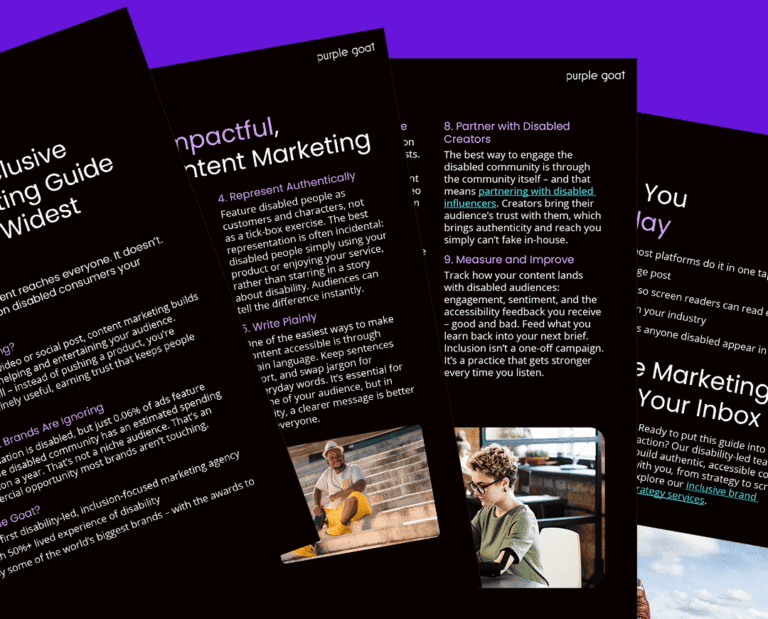


The Design and Disability Exhibition at the V&A South Kensington is a landmark exhibition in accessible design, as it is the first of its kind in the UK. Bringing together objects and works from numerous fields, this exhibition is a celebration of the efforts of Disabled people and allies working towards creating a more equitable society.
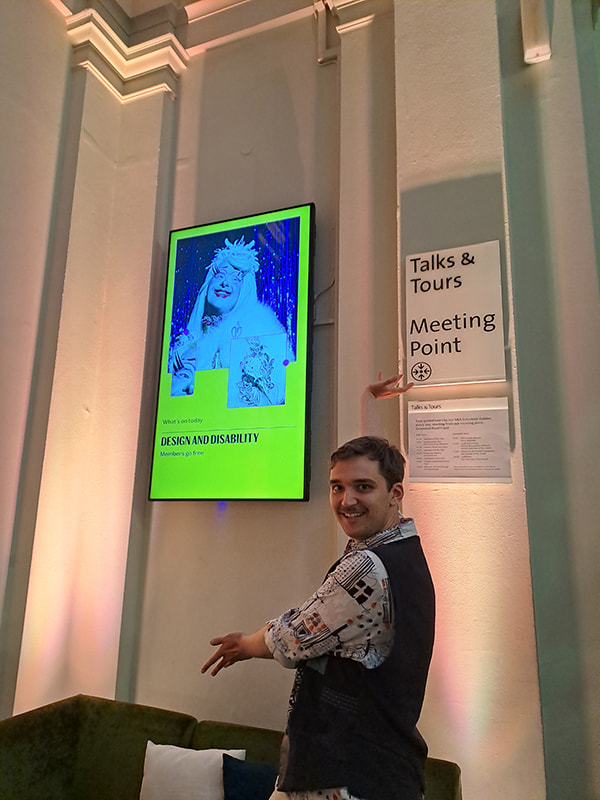
Purple Goat worked with V&A to amplify this launch and exhibition through OOH and influencer marketing, and since I played a small role in this, I was honoured to be able to go to the exhibition’s grand opening at the venue. The work that I had been a part of was in the same space as some of the most remarkable achievements in human history. It was quite an overwhelming thought.
For all the above reasons, the Design and Disability Exhibition is significant to me. As a Graphic Designer who focuses on Inclusive Design, it has been incredible to observe the growing awareness of Inclusive Design. One thing that the Design and Disability Exhibition highlights is how Inclusive Design can be considered and implemented across a range of industries. Today, I want to talk about this concept in relation to this landmark exhibition.
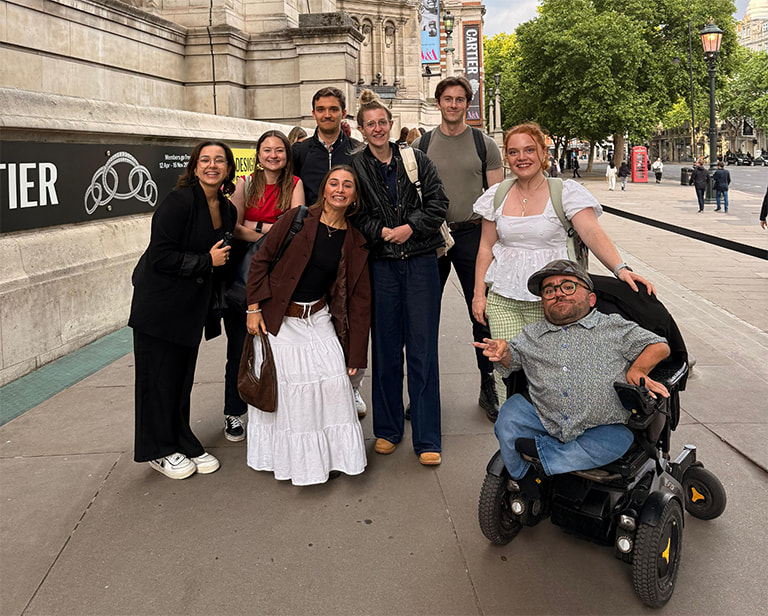
Accessible Design is when the needs of Disabled people are considered during the design process so they can interact with their environment in an equitable way to a non-Disabled person.
There is not one way of doing this. It could be having step-free access to a building, putting closed captions on a training video, having an easy-twist lid on packaging or a whole host of other considerations. Physical or digital, if it enables more people to interact with something, then it is Accessible Design.
Bearing this in mind, Accessible Design looks different in every industry.
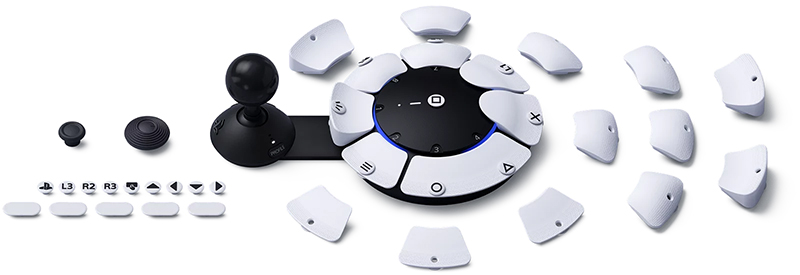
In the gaming industry, there are many barriers to gaming for Disabled people, such as finding a controller that is comfortable and adaptable. One example on show at the Design and Disability Exhibition is the PlayStation 5 Adaptive Controller. This was designed with the Disabled community, allowing for feedback from those with lived experience. Buttons are swappable, the stick length is adjustable and other control devices can be added. These features alongside a range of others allow the controller to be personalised for each Disabled individual. This is a great way for brands to create something, getting some powerful insights from the community that will then guide the creation of the product.
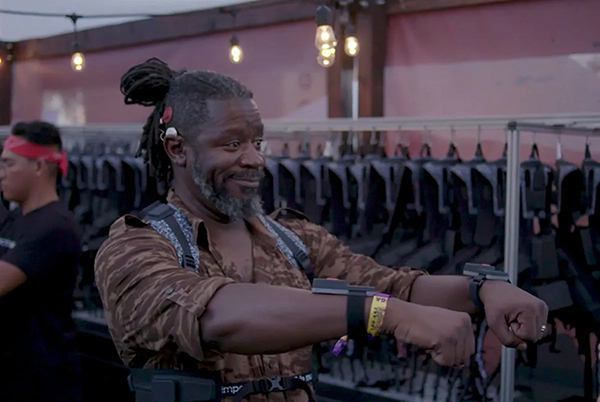
Looking at a completely different industry, there is a misconception that D/deaf people cannot enjoy festivals. The thought is “If they can’t hear the music, then how can they enjoy themselves?” However, this is untrue. D/deaf people can enjoy music too, such as through the vibrations of the music. The Design and Disability Exhibition features a vest that when worn, vibrates in relation to the music. For D/deaf people who may prefer to enjoy music this way, it provides a personal, high-quality experience.
Both of the examples mentioned above are completely different in how they provide an equitable experience for the user. What is important though is that they both do this by considering the ways in which the Disabled audience would prefer to interact with the industry and making that experience as seamless as possible.
The best Inclusive Designs not only help the Disabled community but also change the way that society interacts with its surroundings.
For instance, some of the most commonly used features on phones started out as accessibility tools. You may use Dark Mode, or watch videos on public transport using closed captions. If you do, then you are interacting with Inclusive Design.
I would argue that the mainstream adoption of Inclusive Design features benefits the Disabled community because as these tools become more popular, they are more likely to be included in other products and services too. A feature that started out as only available in one place is then more likely to be available in other places too, meaning that Disabled people have options rather than being confined to “the one option that considered accessibility.”
Accessibility in design has become more commonplace in recent years. It would be difficult to pinpoint when this started, but it is clear that greater awareness surrounding Disability and Inclusivity has led more people becoming conscious of this movement and its societal importance.
As a Graphic Designer, I have noticed that in recent years leading organisations in the Art and Design space such as D&AD have put a stronger emphasis on discussing accessibility alongside traditional subjects in the industry. Personally, I would like to see this sector create an inclusive manifesto and standard of practice to catch up with other industries such as web design that have developed widely-adopted accessibility documentation (WCAG 2.2).
When industry leaders discuss topics, it has a ‘trickle-down effect’ where discussion and implementation seeps into the industry itself. In this case, widespread discussion on Inclusive Design in the Visual Arts will lead to more people educating themselves and practising it.
The ideas discussed in the previous section show why the V&A’s Design and Disability Exhibition is important. By putting Inclusive Design in the public eye across a range of sectors, it spreads conversations about Disability into many new spaces. People who were previously unaware of Inclusive Design and its importance are now more likely to consider it in their work, or ask people who know more than themselves to either educate them or put new guidelines in place.
Fashion has been adopting Inclusive Design at an ever-growing rate over the past few years. From inclusive models to adaptive clothing, the fashion industry has been embracing the fact that human bodies are diverse and therefore clothing should both celebrate and accommodate this.
One of the leaders in this space is Victoria Jenkins, founder of ‘Unhidden,’ a business designing responsibly made, adaptive clothing. Not only has Jenkins brought adaptive fashion to the consumer, but she has also helped to bridge the gap between high and high-street fashion. Unhidden has had shows at London Fashion Week, showing that Adaptive Fashion deserves a spot in the industry. At the same time, Jenkins has also worked with Primark on creating an adaptive clothing range. Both of these achievements show how Inclusive Fashion has spots both on and off the catwalk.
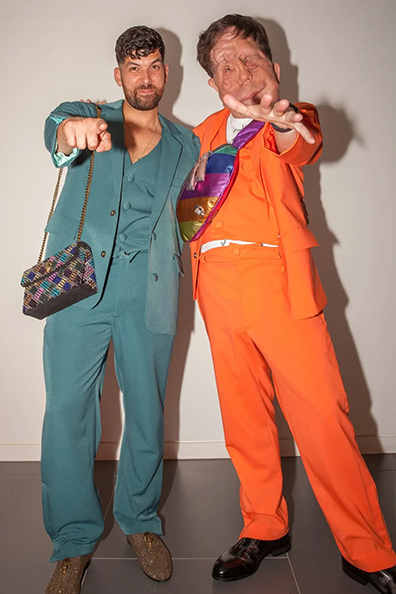
Fashion’s shift towards accessibility shows a societal change in perceptions. In an industry typically associated with conventionally attractive bodies and flawless, show-stopping garments, the move towards Accessible Fashion shows a willingness to reconsider what we think we know, and question if things should be different. It also shows that fashion should be for everyone and businesses need to step-up in making sure that clothing is created with that in mind.
The Design and Disability Exhibition at the V&A South Kensington shows us that Inclusive Design exists in many different forms in different industries. This article has focused on how it has spread conversation in a commercial sense, but it is also worth highlighting the powerful collection of activist work that the exhibition has, which holds additional messages about the importance of Disability Inclusion.
The conversation surrounding Design Accessibility is growing and reaching more spaces in society. To continue this conversation, it is important to reiterate the core principles of Inclusive Design while gradually upskilling people so they are able to implement these important messages.
Building a world where Design includes everyone is going to be a challenge, and it will take a long time to bring about, but it is achievable. It starts by accepting that no single solution can make something equitable for everyone, but instead Inclusive Design is achieved by offering people a range of solutions through which they can pick which ones work best for their individual needs and preferences.
Looking to learn more about accessible design or want to find out how to best represent Disabled people in comms and media?
Work with Purple Goat to unlock new audiences and keep your company at the forefront of the Disability conversation.
Please use our Contact Form to get in touch so we can discuss with you the best way to help your business.