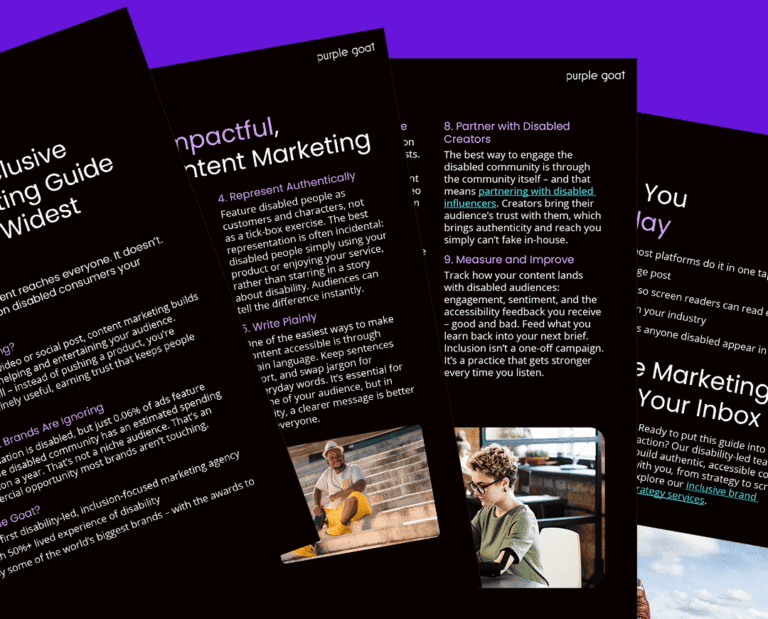
The Ultimate Inclusive Content Marketing Guide: Download Now
Learn how to create content that reaches your widest audience yet.
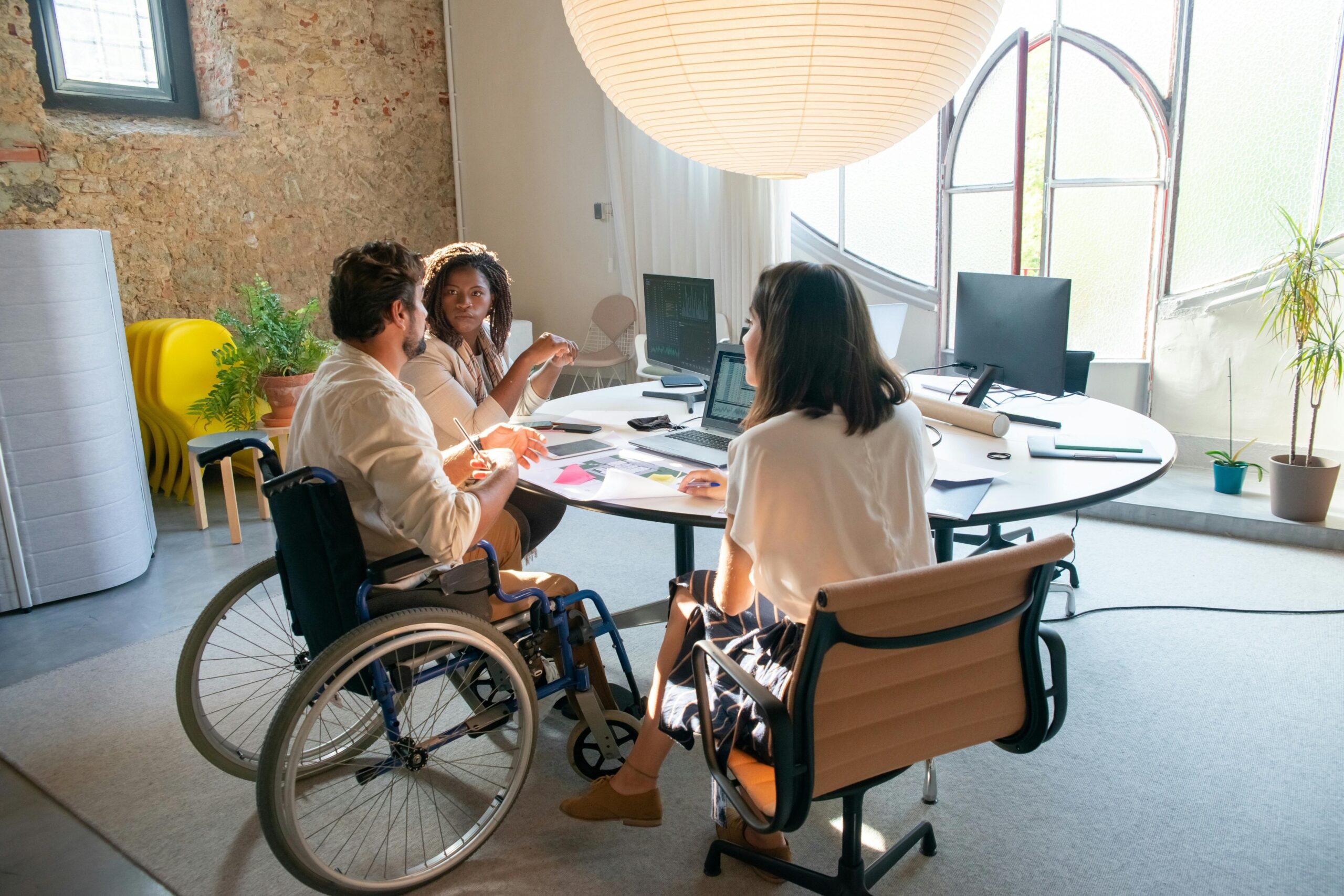

‘Inclusion by Design’ refers to the process of naturally embedding conversations about inclusivity and accessibility into products and services. This ensures that Disabled people don’t have to then retrofit accessibility adjustments at the end to suit their needs.
The Social Model of Disability teaches us that people are Disabled due to societal barriers which reduces their access to opportunities in society that non-Disabled people would otherwise get. By embedding inclusion into our design process, it can help to reduce the number of these societal barriers which helps to cultivate a more equitable society.
When it comes to Inclusive Design, the main phrase that people refer back to is “Nothing About Us, Without Us.” Put simply, this phrase tells designers to work with Disabled people, not for them. Disabled people have lived experience of the barriers they face in society, and that level of interaction with their own disability is something that cannot be replicated or replaced. They will see problems in designs that non-Disabled people may miss, and would understand how people in their community would try to work around problems presented by your design.
In addition, it is also necessary to design for a range of disabilities. It is to your detriment to only consider one group of Disabled people, as you will still be excluding large sections of the population. When designing in such a way, it is also important to remember that sometimes accessibility needs can contradict and work against each other. Instead of designing one solution to suit everyone, the key is to embed a suite of solutions that individuals can tailor to their individual needs.
Inclusive Design leads to tailored solutions that work with the needs of individuals. If everyone is able to access products and services in ways that suit their needs, such as enhancing dexterity, then this helps to promote a more equitable and inclusive society.
On top of this though, it is important to remember that Inclusive Design benefits everyone, not solely Disabled people.
When it comes to phone interfaces, for example, many people choose to use Dark Mode instead of the default. When watching films on public transport, (respectful) people will listen silently (if they don’t have headphones available) and use captions to understand what the characters are saying. Both of these are examples of things that were designed for accessibility but have made their way into mainstream usage.
So, when there is innovation in the Inclusive Design space, what we are in fact seeing is innovation that will benefit everyone. There are situations where using an accessibility feature by non-Disabled people, even if used only once or twice, will prove to be the most effective option.
Inclusive Design should be considered because it is the right thing to do by people. For businesses looking at numbers though, there are also plenty of advantages that they should note.
The spending power of Disabled people and their families is referred to as the Purple Pound. In the UK alone, the Purple Pound is valued at £274 billion per year. An estimated 24% of the UK population is Disabled which equates to roughly 16.1 million people.
With these two stats in mind, things are very clear: if your business doesn’t consider the Disabled community, then it will miss out on major profits. Therefore, Inclusive Design isn’t just ‘the right thing to do’ – it also makes the most business sense.
Across every industry, there are examples of Inclusive Design that have vastly improved user experience.
In the fashion industry, Victoria Jenkins has been making waves with her adaptive fashion brand ‘Unhidden Clothing.’ Clothes can often be inaccessible for certain user groups, with common fashion trends not being suitable for their needs. Jenkins’s brand subverts this expectation, enabling Disabled people to have clothes that are both fashionable and adaptable.
To take an example from the clothing line, we can look at the ‘Teal Backless Crop Top.’ Compared to standard crop tops, Jenkins’s version offers several adjustments such as snap fastening at the back neck for those who may struggle with more typical types of fastening such as buttons. The back being open also means movement is not restricted, which can be an added benefit for manual wheelchair users.
Studies have shown that 59% of Disabled consumers would buy more adaptive wear if it were available from online retailers. 62% of Disabled people in the UK also said that it was difficult to find comfortable clothes that they feel happy in due to their disability, health condition or impairment.
What this shows is that Unhidden Clothing is meeting a need that is currently not being met by large fashion retailers and brands. The results also back this up. Unhidden Clothing has won multiple awards, and founder Victoria Jenkins has an incredible list of achievements too, such as being named by Vogue as one of their 25 most influential Powerhouse Women in September 2023.
In summary, Unhidden Clothing is an excellent example of what happens when Inclusive Design is fully considered throughout a product offering. For other businesses in the fashion industry, they now face competition from someone providing something that they are not. They need to catch up to keep pace with Jenkins’s (and other accessible fashion brands) work or face losing out.
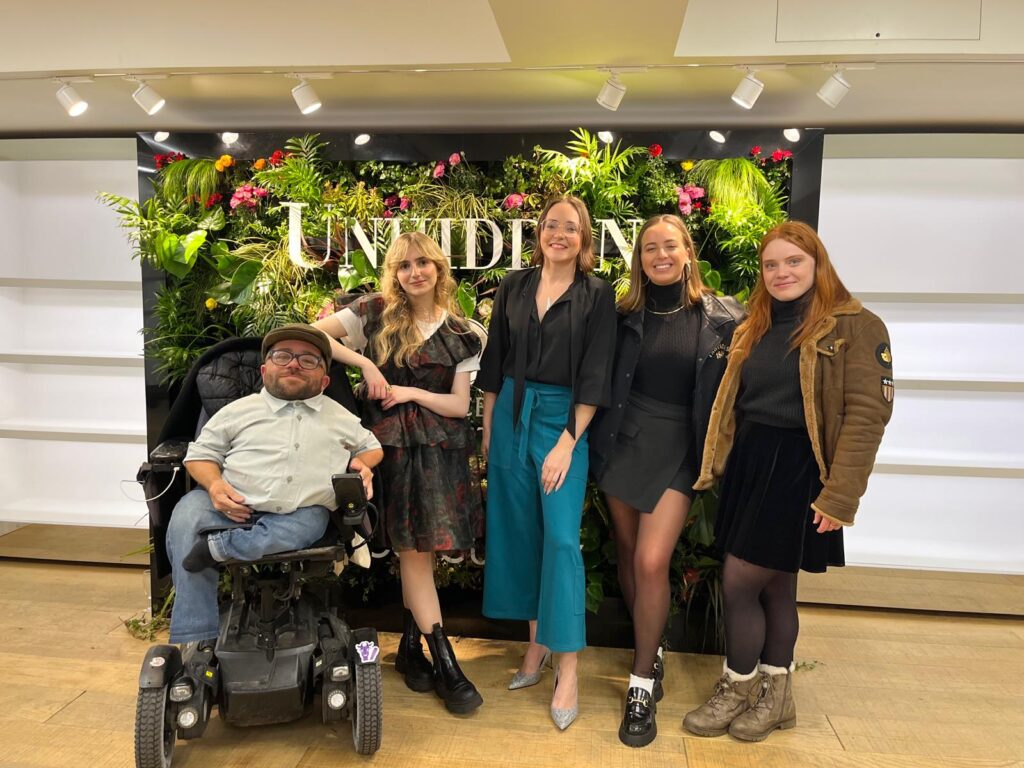
To do Inclusive Design correctly, it should never be an afterthought. Inclusive Design needs to be embedded at every point of the design process, and the Disabled community should be consulted throughout to make sure that decisions are made with them.
In line with this, onboard experts in your field who specialise in Inclusive Design. As we saw above with Victoria Jenkins, Inclusive Design is a specialism that usually couples with a particular industry rather than being studied in isolation. There is a good chance that there is someone who has a deep understanding on how to apply Inclusive Design to your field. By hiring someone like Purple Goat, you can ensure that your project will appeal to a wider user base. If you are unable to hire someone, then it is likely that there will be written research and innovation that you can tap into to get a similar, yet less tailored, level of expertise.
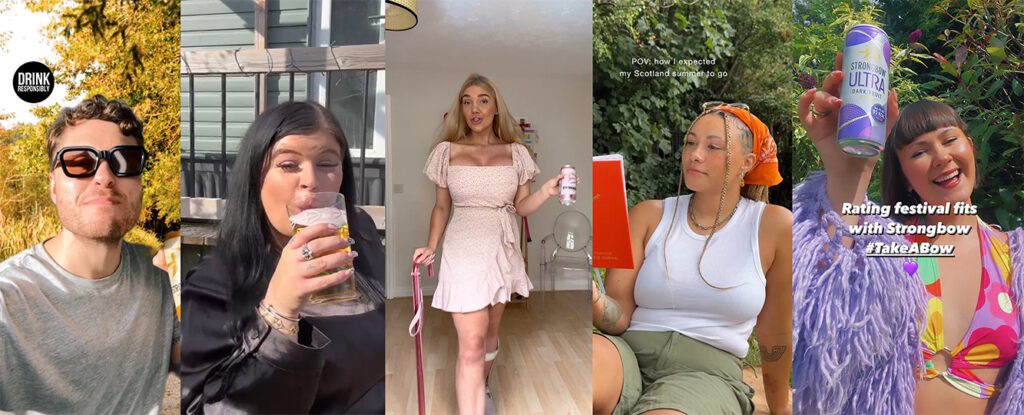
Ever since we started working with Strongbow, there has always been one question: “How do you make the UK’s number 1 cider brand accessible to all?” Through our continued work with them, we have helped answer this through consistent work and sustained efforts.
From influencer campaigns with Disabled creators, to DE&I training and panels where we obtained some powerful insights that were incredibly helpful for the brand. These make up just some of the activities we have undertaken to make sure that Strongbow is doing their best to be accessible to EVERYONE, including the Disabled community. Our case study showcases some of the actions that we undertook during this time.
Then there was our work with Strongbow during Pride.
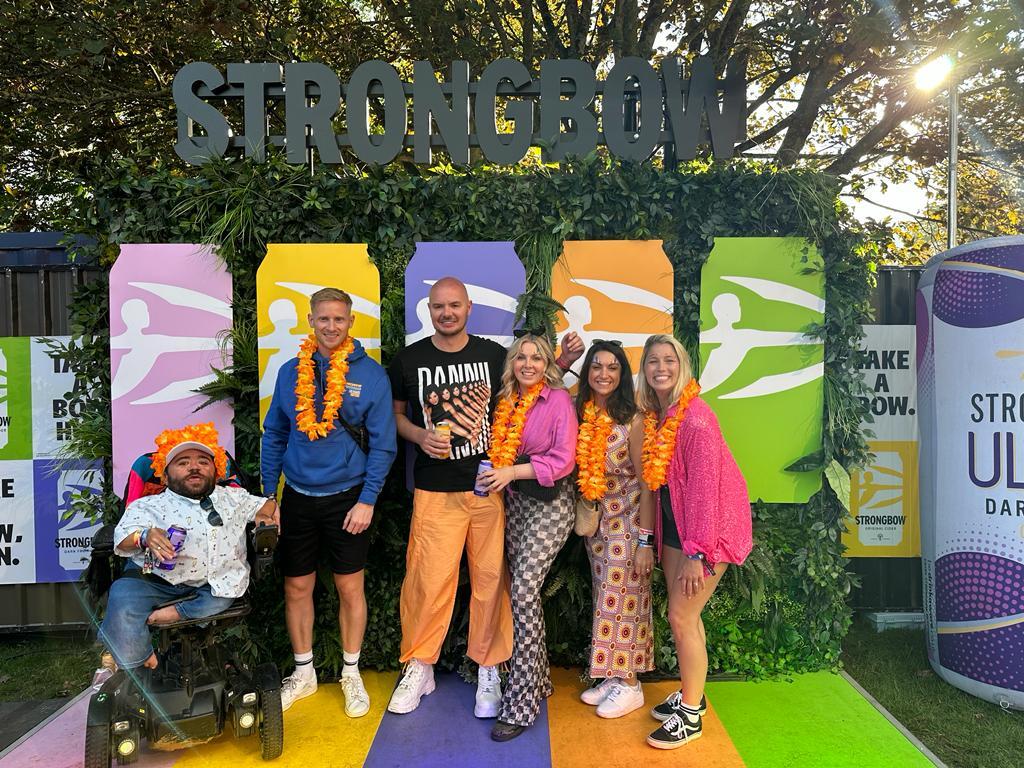
For two years, we’ve helped Strongbow at Brighton Pride by making sure that the Strongbow Yard was an accessible space for all. With our consultancy, they added several features to the Yard, one of which being BSL Performers who not only translated the music into BSL, but also brought the music to life through creative flair and interpretive movement. In addition to the planning stage, we also helped Strongbow on the day by providing on-site training to staff present at the event.
What made this project successful was that it followed the principles of Inclusive Design listed earlier in the article. By working with us at Purple Goat Agency, we were able to offer Strongbow the lived experience and expertise necessary to ensure that they were working with the Disabled community. Additionally, Inclusive Design was considered throughout the whole of this project, not just at the end, which means we avoided it being an afterthought.
Inclusive Design is important because it benefits everyone, not solely Disabled people. As shown with the examples of Unhidden Clothing and Strongbow, when done correctly, Inclusive Design can have a very positive impact on the Disabled community by helping to promote a more equitable society. Additionally, it also benefits the businesses who engage with this.
Do you have any questions about Inclusive Design or how to incorporate it into your project? Contact us at Purple Goat and we can help you to reach the largest untapped market in the world!
Unhidden Clothing by Victoria Jenkins is an adaptive clothing brand that fully incorporates Inclusive Design throughout the creation process. By meeting a previously unfulfilled need in clothing that is both comfortable and stylish for Disabled consumers, Jenkins has disrupted the fashion industry and highlighted a previously unmet consumer need.
Inclusive Design should take the approach of “Nothing about us, without us,” which means that you should design with the Disabled community as opposed to for them. Inclusive Design should consider a wide range of disabilities. Due to the wide range of needs that can sometimes contradict, instead of designing one thing for everyone, you should offer people a suite of solutions that they can tailor to their individual needs.
Inclusion by Design matters for all because Inclusive Design features often end up being adopted by the mainstream. Instances of this include features such as Closed Captions and Dark Mode. Therefore, whenever there is an innovation in the Inclusive Design space, this doesn’t mean the innovation is solely for Disabled people.