The Ultimate Inclusive Content Marketing Guide: Download Now
Learn how to create content that reaches your widest audience yet.


Nintendo is one of the largest gaming companies in the world, often associated with Microsoft and Sony as part of the ‘Big 3’. They hold such a commanding market share because these companies produce the most popular consoles – the Nintendo Switch, Playstation 5 and XBox Series X. On these, people are able to play hundreds of individual games from a range of franchises and developers.
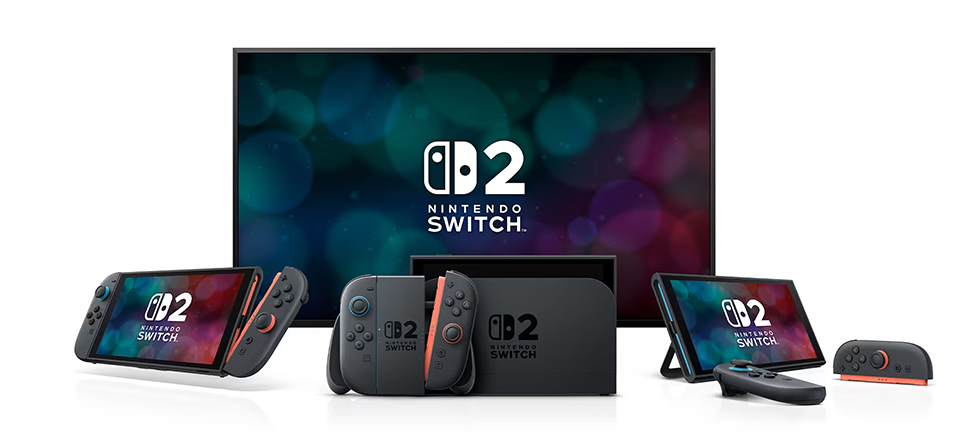
In the next few days Nintendo’s latest console, the Switch 2, will be available for purchase. It will come with significant launch titles including ‘Mario Kart World,’ and ‘Donkey Kong Bananza‘ which both continue two chains of highly successful franchises for Nintendo. All of this excitement and anticipation though raises an important question within the Disabled community: “Is it accessible?”
In this article we will discuss various aspects of the accessibility of the new Nintendo Switch 2 console, and will pose questions that need to be considered as the lifecycle of this console develops.
Gaming is one of the largest industries in the world. In the financial year ending March 2024, Nintendo generated $4.05 billion in the United States alone, which was over a third of its annual revenue. It has also been shown that Nintendo has produced 3 of the top 10 best selling console games of all time, including Mario Kart 8 Deluxe and Pokémon Scarlet and Violet.
Such high profits demonstrate the popularity of gaming worldwide across numerous audiences. Many people want to play computer games, and that includes Disabled people. At Purple Goat we often talk about the Purple Pound, the spending power of Disabled people and their households. In the UK, this is estimated at £274 billion a year. Therefore, there is a strong business case for companies looking to raise their profits to make products and services that are usable and appealing to the Disabled community.
However, there are also other equally valid and important cases that need to be considered, such as the UK’s 2010 Equality Act or the USA’s Americans with Disabilities Act. Additionally, making products and services accessible to Disabled people is simply the right thing to do. Quite often, this does mean putting in more effort and thought, but this is a small cost compared to the good that you’re putting into the world when you make decisions that positively affect Disabled people.
This leads to an important question: “How do we design games to be inclusive?” For this article, we will be looking at, and discussing, two main avenues for how games can be designed inclusively: through technology and through representation.
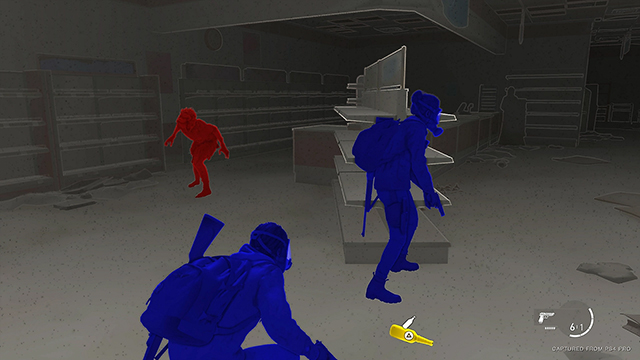
Games, as well as the hardware and software that they work upon, need to function and be considerate of a multitude of accessibility requirements. One of the best examples of this is ‘The Last of Us: Part 2,’ which includes over 60 accessibility settings. While there are too many to list here (I’ve had worse problems writing articles) broad categories range across visual, audio and motor accessibility adjustments. As a fan of gaming, I could imagine that a lot of these would be useful for non-Disabled gamers too who want to engage with modes of play such as speed running and challenge runs, allowing these die-hard fans of the game to discover nuances to optimise their gameplay without the need to download mods and other third-party content. Another example of how Inclusive Design benefits everyone.
On top of games working for everyone, it is also important to highlight disability narratives and Disabled characters throughout plot lines. This is something that has been severely lacking within the gaming industry – I enjoyed reading this article by AbleGamers which goes into much more detail, but harkens back to a lot of what we’ve spoken about at Purple Goat before with disability being used as an association with villainy and other negative stereotypes.
We have started to see gradual improvements in how other marginalised groups are presented in mainline computer games. For instance, ‘Dragon Age: The Veilguard,’ has options to create a canonically trans character, and includes Taash who is another trans member of the party, both of which showcase a step forward for how trans characters should be represented in gaming. These are the types of steps I would like to see for showcasing more Disabled characters in gaming. I found a very insightful article written by a trans gamer about this subject, and I would like to echo their sentiment that while these are good steps forward, they are not the destination and further efforts could be made.
Since the initial Switch 2 Direct, we have seen a respectable amount of accessibility information from Nintendo. Already, we know that the Switch 2 holds numerous accessibility settings, including variable text sizes, high contrast and text-to speech. The original Switch console already had several accessibility settings such as dark mode and zoom, which are also returning.
A new feature of particular note is an in-built screen reader which, while exciting, is something that Playstation and XBox already offer, demonstrating that maybe Nintendo is somewhat playing catchup with its competitors in terms of accessibility. Whether this will work with games as they are released is also currently unknown. We have already seen examples of games (e.g. Pentiment) which have been compatible with accessibility features on other consoles but have lacked the same equivalent on Nintendo platforms. There is a chance that this may change though.
From looking at competitors XBox and Playstation, it appears that they also offer a similar range of features, so now the ‘Big 3’ are roughly in line with each other. Overall, this is a noticeable improvement for Nintendo, but we must acknowledge that they didn’t have a lot to begin with.
Those who have been able to play the Switch 2 early have said that it is quite like the original Switch, but slightly heavier and larger. Joysticks and buttons appear to be slightly larger, and the magnets holding the Joycons to the sides feel a bit stronger. Something heavier is always going to create an accessibility barrier, but the increase in sizes and robustness of the console is a bonus. There are also reports that ‘Joycon Drift’ may be fixed with the Switch 2, which all users would welcome.
As for alternative control methods, it appears that the new Switch 2 Pro Controller is similar, with the back buttons being a bit more ‘built-in’ to the controller. One of the new features of the Switch 2 is mouse mode, where the Joycons can be undocked and slid across surfaces like a traditional computer mouse. Early notes on this suggest that it is an adjustment, but one that people can get used to. There may be add-ons in the future that can make the mouse mode feel a bit easier to use, and it has been shown that the new Metroid Prime 4 game has the ability to adjust the ‘mouse’ sensitivity in-game. The one major drawback so far is that it seems the mouse mode cannot be used on trousers, which could be a negative to some, such as those with reduced mobility.
There is also evidence to show that button remapping is more common on the Switch 2 than in previous consoles. One thing people have noticed that’s very exciting is the GameCube games appear to have button remapping tailored to each individual game. If this is a feature that could be rolled-out to all Switch 2 games, this could mean a lot to gamers who require certain priority buttons to be mapped to specific controls. On the Pro Controller, the GL and GR buttons can apparently also be remapped to any button, which also improves flexibility.
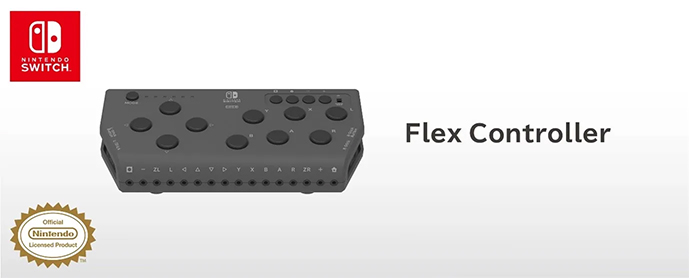
The final, and arguably one of the most important aspects of the Switch 2’s controllers, is whether the console works with third party accessible controllers. The Switch did have an officially licensed accessible controller called the Flex Controller, that could be bought from secondary websites. Also known as the ‘Hori Flex’, this controller is designed to be used when docked, which is ideal for those who want to play on a screen, but less so for those who wanted to utilise the original Switch’s handheld capabilities. This is because the Hori Flex requires a USB-C port to be plugged into, and the only one on the original Switch was at the base on the console, meaning the controller couldn’t be plugged in and then rested against a surface. However, the Switch 2 offers a second USB-C port on top of the console, meaning that the controller can be plugged in from the other end, making it much easier to use in handheld mode. Nintendo has not confirmed yet whether or not the Hori Flex is going to be compatible with the Switch 2, but if it is, then to have an accessible controller that works with a console on launch would be impressive.
These things show a large step-forward for the Switch 2 in terms of controller accessibility, and we look forward to seeing how this conversation progresses.
The main thing we are yet to see is how many individual games for the Switch 2 adopt accessibility features. While the console itself has inbuilt accessibility features, what we cannot yet confirm is how many of the games themselves will have similar functionality. Or alternatively, whether the Switch 2’s accessibility features could be compatible with the games. There are small wins that developers can put into their games, such as captioning and text sizes, which shouldn’t be too difficult. Ideally, every game would offer an entire suite of accessibility options such as what was shown with ‘The Last of Us 2.’
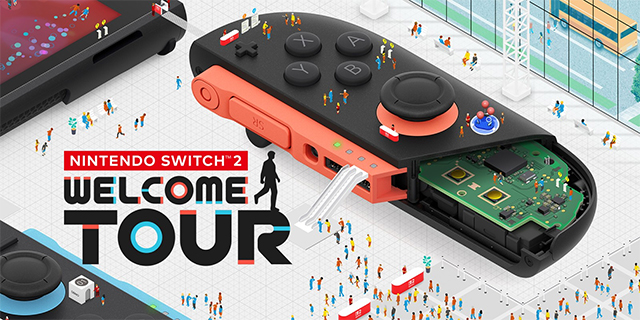
Also, it needs to be pointed out that the Switch 2’s hardware introduction, titled “Nintendo Switch 2 Welcome Tour,” will be priced at $9.99. There has been much conversation online about the price of the Nintendo Switch 2 and the games being a marked increase from the original Switch. That conversation aside, pricing what is essentially a gamified instruction manual for any amount of money is not only highly controversial but also creates an accessibility barrier. There will be people who require the instructions and the pacing of this game to guide them and help them become familiar with their new console. Making this a separate, ticketed item rather than something included feels dubious, especially when Playstation 5’s ‘Astro’s Playroom’ was free, showing it can be done.
Finally, it will be interesting to track how responsive Nintendo is over the next 12 months, and whether or not they will put new accessibility settings in the console based on user feedback. While the list of accessibility settings that Nintendo has included on launch is good, there’s always room for improvement. Even if it is taking what is there and making it usable over a wider range of functions, then that goes a long way to showing ongoing improvement. For instance, we already know that not all screens are going to support a screen reader, is this something that Nintendo could work towards resolving in the future?

Something incredibly noteworthy about the Switch 2’s launch comes from one of its earliest titles – ‘Drag X Drive.’ This game is significant because it is based around wheelchair basketball, a sport not traditionally utilised in the gaming industry. Disability representation is also quite often overlooked for computer game characters, especially with major franchises, so to have something that goes against the mould is welcomed.
Launching this summer, ‘Drag X Drive’ is a 3-on-3 wheelchair basketball game utilising the Switch 2’s mouse controls. It follows traditional scoring for the sport by shooting hoops, but also awards bonuses for doing things such as tricks on the halfpipe edges.
The one early concern that I have for this game is that the environment shown in the trailer is quite dark and small, and the characters looked quite plain and they all blend into each other. Nothing other than the core gameplay was shown. When the trailer was first shown, it fascinated me, but I couldn’t help thinking: “Is that it?”
I’m really excited for this game and what it represents, and my critique of it here isn’t out of not liking it, but instead wishing for more. I’d love to see bigger, more interesting environments, more character customisation and generally more things to make me feel excited and wanting to keep coming back to the game in the future. I’d hate for this to be something that is forgotten about in six months and never looked at again. More mainstream appeal could make this the start of a wider conversation.
The future of inclusive gaming is something that we can only speculate upon, but there are several points of consideration based on the arrival of the Switch 2 that we can discuss here.
With these new features that Nintendo has added to the Switch 2, they have tacitly committed to creating systems and games that improve the state of gaming. Disabled gamers can now expect an improved standard from Nintendo, and this must be welcomed. Quite often at Purple Goat, we speak about the importance of long-term commitments from brands to avoid appearing tokenistic. Moving forward, Nintendo, as a minimum, needs to maintain what they have started here, but should seek to improve their accessibility offering and do more going forward.
Through these actions, Nintendo is showing support to Disabled gamers. On their own website, Nintendo even states that their mission is “to put smiles on the faces of everyone we touch.” The only way that Nintendo can authentically achieve this is by appealing to the needs of Disabled gamers and making them feel seen through actions. Their actions here are a subtle nod to this.
With these steps, it brings Nintendo more in line with what is offered by their competition. In an attempt to offer the most, we can hope that this is the start of game companies putting further effort into accessibility so they are the most inclusive on the market. Such actions can only stand to benefit Disabled consumers so long as these steps are worked on with the Disabled community and not for them.
Following on from this, the next step for the gaming industry more generally is to work with Disabled people more to learn from their lived experience and expertise. At Purple Goat, we have offered this to companies through inclusive focus groups where direct insight can be gained. Such actions from game companies would be the best course of action because it would lay the foundations for long-term inclusive strategies.
The Switch 2 shows a significant improvement in Nintendo’s accessibility offering for Disabled gamers who would like to engage with their products. It feels as though disability has not been an afterthought here, as there are several places in which significant accessibility improvements can be seen. ‘Drag X Drive’ also offers a new avenue of disability representation in gaming, but we need to wait for the long-term to see if Nintendo continues to support this.
While the above is true, Nintendo could improve on the consistency of the accessibility settings and how they are implemented throughout the entirety of the Switch 2. Even if improvements aren’t instantly seen, it would be good to see changes made over the first 12 months.
Overall, I remain optimistic for the future of this console and cannot wait to see how the accessibility conversation develops over the Switch 2’s lifecycle. I’d be interested in eventually getting one myself – if only my original Switch backlog wasn’t so long!
Thinking of interacting with Disabled gamers or the Disabled community more generally? I’d recommend checking out our Virgin Media case study where we helped showcase the accessibility of the Virgin Media Gamepad space at The O2.
And if you’re looking to create a representative and authentic gaming campaign, make sure to reach out to the team at Purple Goat.
Inclusive gaming refers to the steps made in the gaming industry to make computer games more accessible and inclusive to all gamers, including those within the Disabled community.
Games can be inclusive in numerous ways, from making the game usable and operable for people with different access requirements, through to how a game deals with topics surrounding marginalised communities.