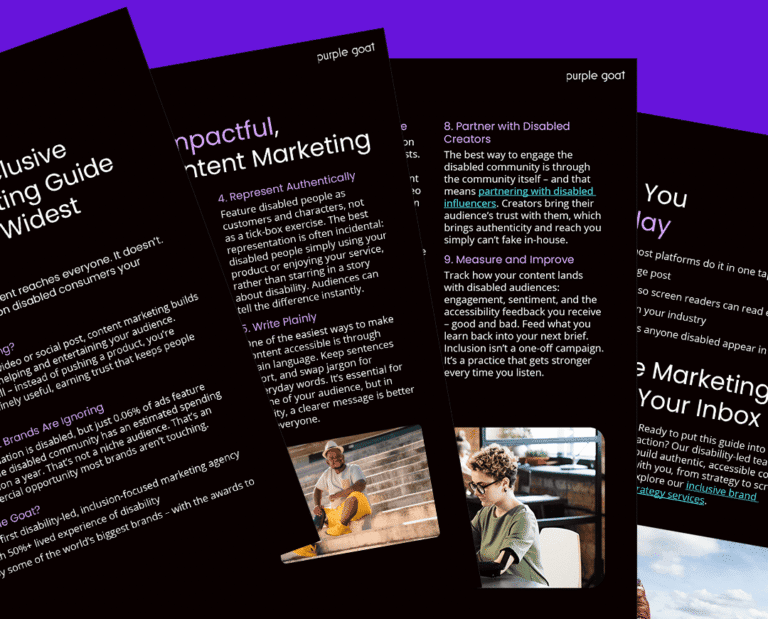
The Ultimate Inclusive Content Marketing Guide: Download Now
Learn how to create content that reaches your widest audience yet.
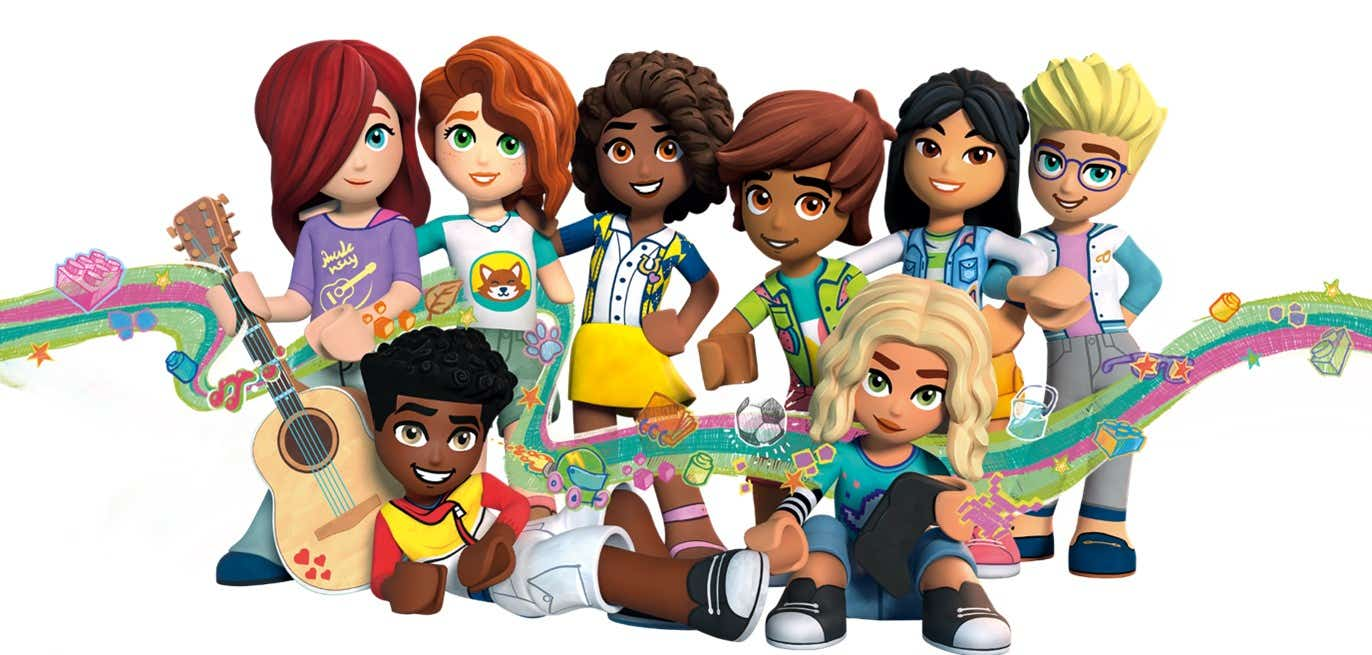
In the evolving landscape of inclusive marketing, disability representation is often treated as an afterthought. Many brands champion diversity but fail to include disability the right way, often resorting to tokenism rather than focusing on authentic representation. To create truly inclusive campaigns, brands must move beyond surface-level diversity and engage with disabled communities in a way that is accurate, empowering, and representative of lived experiences.
In this article, we will take a look at the differences, similarities and challenges faced, as well as highlight examples of successful marketing campaigns. So, let’s begin!
Let’s start with diversity, and how it relates to disability representation.
Diversity is a broader term that refers to a wide range of human differences, including race, gender, sexuality, age, religion, and socioeconomic status, as well as disability. Diversity is about recognising, respecting, and valuing these differences in society.
In workplaces, schools, media and politics a broader perspective can increase levels of creativity, problem solving and innovation, as well as improve levels of empathy and understanding between people from different walks of life. Some people may think that diversity is about being politically correct, however, this is not true; diversity is about creating an environment where everyone feels included, respected and empowered!
Disability representation involves accurately portraying people with disabilities in all facets of life – in media, marketing, literature, politics, education and employment. It highlights the importance of considering accessibility, understanding disability as a part of human diversity, and ensuring that people with disabilities have equal opportunities and rights.
This form of representation is about more than just presence; it’s about portraying disabled individuals in a manner that is respectful, realistic, and devoid of stereotypes. It involves recognising the unique challenges faced by disabled individuals while also celebrating their contributions, strengths, and resilience. True disability representation requires listening to and amplifying the voices of the disabled community, ensuring that their stories and perspectives are shared in an authentic and meaningful way. Through this, we challenge misconceptions and foster a more inclusive and understanding society, where differences are not just acknowledged, but valued.
Disability representation plays a key role in shaping a society that truly values and embraces all its members. When people with disabilities are represented accurately and authentically in media, literature, the workplace, and in public life, it empowers these individuals by acknowledging their presence and contributions whilst educating wider society. Authentic disability representation is about ‘flipping those stereotypes we see all too often as tropes of disability’ and creating a world where differences are celebrated, not just accommodated. Accurate representation promotes equal opportunities and supports the recognition of the rights of the Disabled community.
Disability is not a monolith. It encompasses a broad spectrum, from visible disabilities (such as mobility impairments or limb differences) to invisible disabilities (such as chronic pain conditions, neurodivergence, and mental health disorders). Many marketing campaigns focus on visible disabilities (did you know that only 8% of the disabled community are wheelchair users?) while neglecting those that are less immediately apparent, leading to incomplete or misleading portrayals.
While diversity, equity, and inclusion (DEI) initiatives aim to create more equitable workplaces and marketing strategies, disability is frequently excluded from the conversation. Many companies promote racial and gender diversity but fail to integrate disability into their strategies. True inclusivity means ensuring that disability is not just an add-on but a fundamental part of DEI efforts!
Whilst disability representation and diversity are two separate terms, there are some similarities. These include the promotion of inclusivity, challenging stereotypes, raising levels of education and awareness, advocating for equal opportunities, creating physical, social and educational environments accessible to all, highlighting the importance of fair representation and empowering individuals to feel valued in society.
It’s important to remember that there’s no diversity without disability, and when talking about disability, it’s also important to remember the diverse backgrounds within the Disabled community.
Both terms may also face similar challenges, which include:

Mainstream media has historically relied on outdated and damaging disability tropes, such as the “inspirational hero” or the “tragic victim.” Authentic representation moves away from these limiting narratives, instead showcasing disabled individuals in everyday roles—just as diverse and multifaceted as anyone else.
Consumers are increasingly discerning when it comes to authenticity. Brands that engage meaningfully with the Disabled community—by hiring disabled talent, consulting with advocacy organisations, and prioritising accessibility—build stronger, trust-based relationships with their audience.
The most powerful marketing campaigns are those that reflect real-life experiences. Including disabled voices in content creation—not just as subjects but as writers, directors, consultants, and brand ambassadors—ensures that representation is both authentic and impactful. Want to understand what that lived experience really looks like, beyond the campaign brief?
Our podcast episode answering Google’s most searched questions on disability is a great starting point.
Pantene’s #PowerOfHair campaign featured Lucy Edwards, who shares her experience of being blind and ‘seeing through touch’. Lucy shares what her hair feels like and how she knows what it looks like ‘through that annoying sound.’ Lucy also uses the phrase ‘great hair is not how it looks to the world, it is how it feels to me.’
By focusing on empowerment rather than disability itself, Pantene successfully integrated inclusion without making it the sole focus of the narrative. This subtle, yet powerful script, successfully markets the product whilst authentically sharing Lucy’s experience of being blind. This demonstrates how those who are visually impaired or blind can use this product and feel empowered. Pantene then takes it a step further and uploads accessibility instructions in the video description, including how to activate audio descriptions and closed captioning.
This advert by London North Eastern Railway features a wide variety of passengers of all ages, genders and ethnic backgrounds. In natural and unforced ways. LNER weave many narratives into this advert and successfully, yet subtly celebrate the diversity of people.
This ad takes authentic voices and experiences to another level, following the day in the life of a girl called Ash, who has been diagnosed with Autism. The video educates people about the needs of Autistic people, such as Ash telling her teacher that she needs her ‘overlay’ to be able to read a document.
However, it also beautifully highlights her skills and strengths, such as her mathematic abilities in the scene where her friend asks, ‘how did you do that without a calculator?!’ The advert also weaves in friends, teachers and pupils from various ethnic backgrounds, which touches on diversity. The addition of high-pitched ringing noises alongside fading background noise adds a further layer of what sensory overwhelm might feel like, enabling people to empathise and understand Ash’s day-to-day experiences.
As you can see, both disability representation and diversity provide platforms for authentic voices and experiences to be heard and acknowledged. One of the key takeaways is that all differences should be celebrated, not just accommodated. The narrative is slowly shifting, and we hope that in the future, the first thought that comes to people’s minds can become, ‘Wow, what a unique perspective and asset to our team and society!’ rather than ‘Oh, we need to make adaptations.’
Here at Purple Goat, we specialise in listening to the disabled community and delivering bespoke qualitative and quantitative research to understand what disabled individuals think and feel about your product, brand or service. We also support organisations to run inclusive paid social campaigns to drive results. Get in touch and join the herd at Purple Goat to find out more about how you can authentically represent and empower the disabled community!
True disability representation in marketing requires more than just placing a wheelchair user in an ad. It demands intentionality, collaboration with disabled communities, and a commitment to long-term inclusivity rather than performative gestures. By prioritizing authenticity over tokenism, brands can not only foster inclusivity but also drive meaningful engagement and business growth.
Disability inclusion refers to systemic efforts to make environments, workplaces, and services accessible to disabled individuals. Disability representation, on the other hand, focuses on how disability is portrayed in media, advertising, and branding. However, both should focus on authenticity.
To avoid tokenism, brands should:
While there are no universal laws requiring disability representation in marketing, accessibility regulations (such as the Americans with Disabilities Act and the UK’s Equality Act) mandate that digital content and services be accessible to disabled individuals.
By integrating authentic disability representation into their marketing strategies, brands can move beyond tokenism and create truly inclusive narratives that reflect the diverse world we live in.