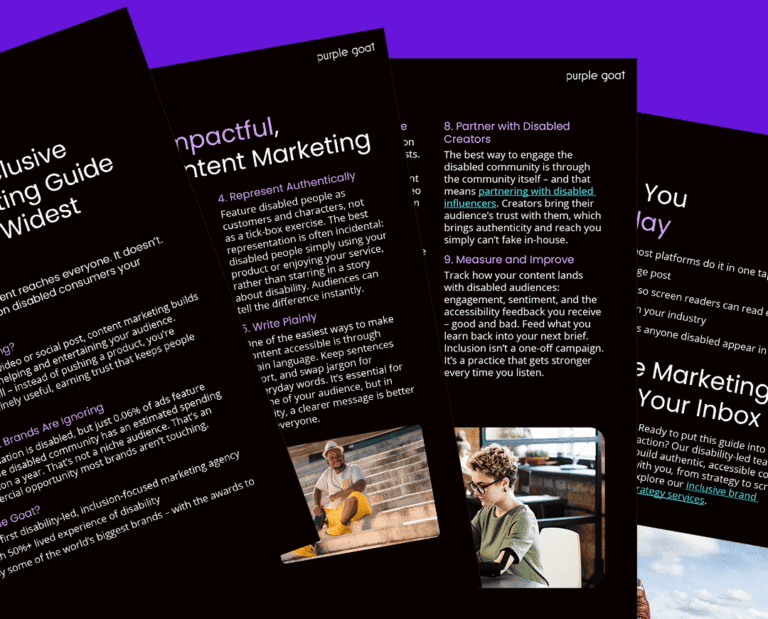
The Ultimate Inclusive Content Marketing Guide: Download Now
Learn how to create content that reaches your widest audience yet.


Purpose-driven branding has moved from a “nice to have” to a critical driver of brand relevance and long-term growth.
Consumers are bombarded with marketing messages every day, and by making a connection with them, brands can stand out among their competitors. Emotions are powerful, and they shouldn’t be ignored in any industry, they can be the difference between your brand being remembered and chosen vs not.
So what exactly is purpose driven branding, and how can brands use it to grow? This article explores the purpose driven brand meaning, the role of inclusion, and how purpose-led strategies can help brands build deeper connections and stronger business impact.
Some brands are just focused on profits, but those with purpose driven branding see more than just profits, they see a long-term story and a strategic approach.
These brands have their mission and values embedded into every element, from messaging and marketing to operations and culture. It goes beyond simply selling products or services, and it focuses on why the brand exists and the positive impact it can have in people’s lives and society.
A purpose driven brand is one that:
Purpose and values are essential for a brand’s identity. They influence how a brand looks, behaves and shows up in the world, which gives their customers information to decide how they feel about it.
Brands that lack a defined purpose often struggle to differentiate. Purpose-driven brands, on the other hand, create emotional resonance and long-term relevance.
We mentioned at the beginning that consumers nowadays see messages from brands every day, and this, added to the rise in social media, makes them want to be more informed when selecting the brands they want to support.
Purpose doesn’t just give brands an ethical stance, it provides them with a commercial advantage. Purpose-driven brands are more likely to attract loyal customers and build resilience during market disruption.
Research has shown that consumers are four times more likely to buy a product or service from a brand that has a strong purpose. Moreover, according to the Edelman Trust Barometer Special Report on Brands, consumers increasingly expect brands to take action on societal issues, and they reward those that do with trust and advocacy.
If you think about the reasons why you trust your friends is probably because they are honest with you, their actions are consistent with their values, and they have an emotional connection to you, they’re not just there for the birthday gifts and party invites.
Something similar happens with purpose-driven brands.
When customers believe in a brand’s purpose, they are more likely to stay loyal, even when competitors offer cheaper alternatives.
We have to talk about inclusion here. Without it, brands that are trying to be purpose-driven risk looking performative and disconnected from their audiences.
Inclusive brands recognise and respect diverse identities and lived experiences, both in how they communicate with their customers, how they create their products and how they operate as a company. To understand this more deeply, you can explore our article on what inclusive marketing really means.

Inclusive marketing is essential for purpose-driven brands, as it helps them reflect the real world, not just idealised versions of it, and customers see it.
Inclusive marketing is an incredible commercial opportunity for brands, and in the context of purpose-driven ones, it helps tie everything together.
It helps reach underserved audiences authentically, avoid harmful stereotypes and build credibility across different communities. And furthermore, it’s not just about words, they translate values into action. We love seeing brands that not only talk the talk, but also walk the walk, and do something exciting like a diverse influencer campaign.
One of the issues we see brands face is the fear of doing the wrong thing or being called out. And while it’s normal to feel this way, especially if you’ve never defined your brand’s purpose, or focused on inclusion, it shouldn’t stop them from doing it.
Yes, performative action can be spotted quickly by consumers. But if a brand is truly committed to being purpose-driven, it will also be easy to see. It requires brands to show:
Learn more on our article on authentically inclusive marketing.
Purpose and inclusion are measurable, and the benefits they bring brands are BIG. Those that invest in them often see improvements in:
There is clear evidence linking inclusion to performance, you can explore it more in this article on the ROI of diversity and inclusion, or check out our podcast episode below.
Developing a purpose driven brand identity requires some time and intention, but it’s incredibly worth it at the end.
You can start by asking:
Your purpose should be specific and rooted in real-world impact.
Inclusion should not sit as a campaign add-on. It must be embedded into every aspect of a project, from the strategy to the creative. This ensures your purpose is reflected consistently.
While your external actions are key, brands that forget about what they do internally, and matching those two, will fail trying to be purpose-driven. There needs to be alignment across leadership, operations, and marketing to prove credibility.
Patagonia is known for being much more than an outdoor clothing brand. They are vocal about their impact on the environment and their activism in the field. And as a brand that sells products aimed to be used in nature, it aligns perfectly with its consumers’ values.

Everyone loves chocolate, but chocolate that is aimed at making positive change in the industry tastes even better. Every aspect of Tony’s focuses on creating a more sustainable cocoa industry, from the shapes in the chocolate bars to their fair trade practices.

We’ve talked about Dove in the past due to its focus on ethical marketing, and it’s a great example of a purpose-driven brand. Nowadays, their products are much more than simple beauty bars and shampoos, they aim to tackle society’s unattainable beauty standards, and create educational resources for young people through their Dove Self Esteem Project.

Everything when it comes to strategy comes with potential mistakes that brands can make, but the sooner you know them, the earliest you’ll avoid making them.
Audiences are changing, and the brands that stay in the past won’t be growing. The future of brands is one rooted on purpose and inclusion. Brands that fail to connect and represent with their diverse audiences will fall behind.
Purpose-driven brands that prioritise inclusion now will be better positioned for the future.
Purpose-driven branding cannot succeed without understanding the lived experiences, needs, and barriers faced by different communities. Assuming you have all the answers is a big mistake, make sure you focus on insights and working with the community from the start.
At Purple Goat, we help brands turn purpose into action through consumer research and insights. By engaging directly with diverse audiences, your brand can uncover nuanced perspectives that inform smarter brand strategy and stronger performance. Learn more about Purple Goat’s inclusive consumer research and insights services here.
Purpose driven branding, as well as inclusion, are not one-off exercises, they’re an ongoing commitment. Partnering with experts, like Purple Goat, who understand inclusion, representation, and cultural nuance can help brands move beyond intention to meaningful impact.
If you’re ready to build a brand strategy rooted in purpose, inclusion, and long-term growth, explore our brand strategy services below: