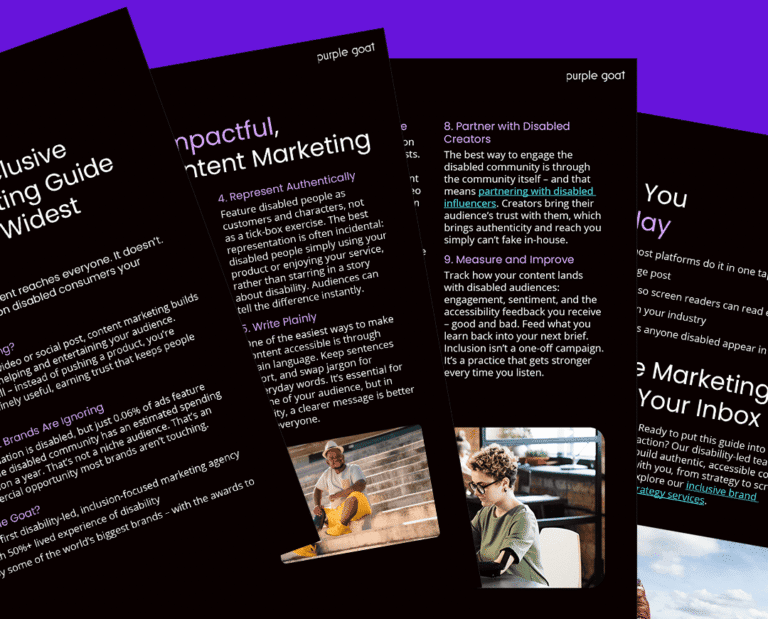
The Ultimate Inclusive Content Marketing Guide: Download Now
Learn how to create content that reaches your widest audience yet.


Inclusive strategies for brands that care about accessibility, representation, and impact.
Marketing should speak to everyone. Yet, many brands overlook the Deaf and Hard-of-Hearing community, an audience rich in culture, loyalty, and buying power. If your campaigns rely solely on sound or spoken word, you’re not just missing out on engagement, you’re missing the mark on inclusivity.
At Purple Goat, we believe inclusive deaf marketing is the smart option to go for. In this article, we will be sharing 11 tips that will help your brand communicate authentically with Deaf and Hard-of-Hearing audiences, build lasting trust, and lead the way toward a more accessible future!
Over 430 million people globally experience some type of hearing loss. In the UK alone, estimates suggest 18 million people identify as Deaf or Hard-of-Hearing. This stat might surprise you, but the Disabled community is the largest minority group in the world! And this community spans all ages, ethnicities, and identities. Recognising the size and diversity of this audience is your first step to understand the power of truly inclusive marketing.
Deaf culture is something extremely important for the community, it isn’t just about language. Respecting these nuances, such as eye contact, visual cues, and community values, goes far beyond compliance, it’s about connection.

If your visuals can carry your message with the sound off, you’re doing it right. Use expressive body language, bold imagery, and visuals to tell your story.
Design matters. Call-to-actions must also be visible without relying on audio. Keep it clean, clear, and eye-friendly.
Captions are a must-have. They should be accurate, well-timed, and descriptive. Many platforms offer auto-captioning, but this usually comes with errors, so make sure to review and edit the captions accordingly before sending it live.
Representation is necessary. Include certified interpreters in live events, videos, and important content. This shows a deep respect for the community and an interest in creating accessible content.
Use high-contrast text and backgrounds. Avoid colour combinations that are hard to distinguish (like red/green). Accessibility tools like the WebAIM contrast checker can help you in these cases.
Readable typefaces and generous spacing help everyone, not just the Deaf community. Sans-serif fonts often work best for clarity.
Marketing with the community is far more powerful than marketing to it. Hire deaf creatives, producers, consultants, and talent. They’ll spot nuances in your deaf marketing campaigns that your team might miss, and help tell stories with depth and authenticity.
Partnerships with Deaf influencers or consultants ensure your campaign is truly inclusive. Get insights from the community and understand your audience better.
Instagram, TikTok, YouTube, LinkedIn, they all offer tools like auto-captioning, alt text, and visual cues. Learn the features, and use them on a daily basis.
Social campaigns are truly beneficial for brands, but there are some things you need to keep in mind. Avoid flashing animations. Use text overlays, include transcripts if possible, and always have captions. Remember: if your story requires audio to make sense, it’s not accessible.
Digital ads, experiential marketing, and even product packaging can engage the senses beyond sound. Different inclusive activations can also show your consideration in creating accessible content for everyone.
Tech-forward brands can innovate with visual or vibrating alerts to replace audio cues. Think smart devices, event activations, or in-store experiences that consider all users.
Work with Deaf and hard-of-hearing people in your user testing, focus groups, and reviews. Their feedback will make your campaign stronger!
Use feedback to refine. True inclusion is a process, not a checkbox exercise.

Offer training on Deaf culture, inclusive language, and accessibility do’s and don’ts. Even basic awareness can prevent major missteps.
Track engagement from Deaf users. Monitor caption usage, video completion rates, and social feedback. Did your content reach and resonate with its intended audience?
Accessibility isn’t a trend. It’s a long-term investment in brand trust, loyalty, and cultural impact. Keep evolving your strategy and creating inclusive deaf marketing all year long.
Ready to build inclusive marketing that works with your brand?
At Purple Goat, we craft campaigns that centre accessibility, authenticity, and impact. Let’s create marketing that everyone can engage with, whether or not they use sound.
And Happy Deaf Awareness Week!
Q: How do you promote deaf awareness?
By elevating deaf voices, using inclusive language, ensuring communication access, and creating content that reflects deaf experiences authentically.
Q: What are some examples of deaf culture?
BSL, Deaf football, visual storytelling, deaf theatre, and community values such as collectivism and visual orientation are all part of deaf cultural identity.
Q: Why is inclusivity important in marketing?
Because people want to see themselves represented. Inclusive marketing drives loyalty, expands reach, and reflects the real world.
Q: Why are brands failing to market to deaf consumers?
Many brands overlook deaf audiences due to a lack of awareness or an over-reliance on sound-based content. The result? Missed opportunities and tone-deaf messaging.