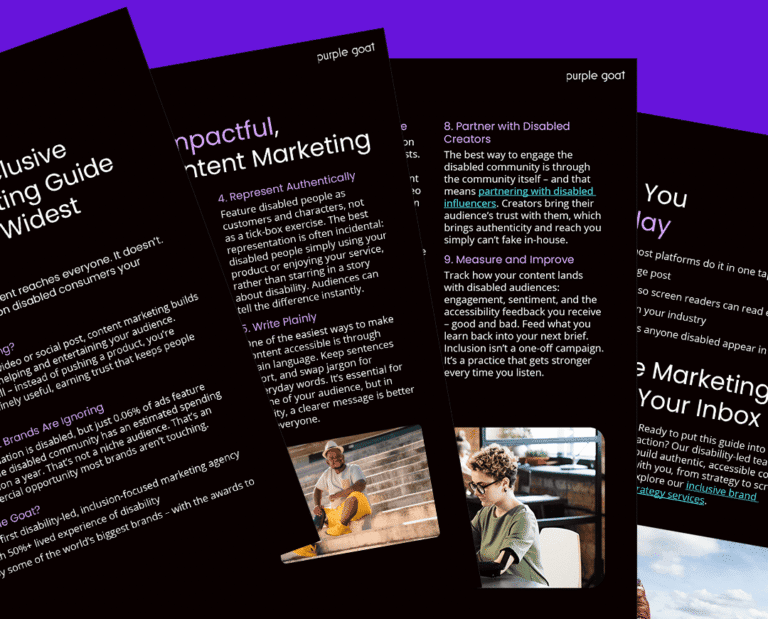
The Ultimate Inclusive Content Marketing Guide: Download Now
Learn how to create content that reaches your widest audience yet.


Storytelling is key in marketing, and to create an authentic story you must have an experience to lean into. Brands that have a diverse marketing team or work with diverse communities can leverage individual experiences and create something truly authentic and inclusive. This is why it’s vital in marketing to have a diverse team behind the camera – as well as in front of it.
Lived experience refers to the firsthand knowledge and insights individuals gain through personal encounters with different aspects of life, particularly in relation to identity, culture, and social challenges. In marketing, incorporating these perspectives leads to more authentic storytelling.
Marketers who actively listen to and engage with diverse lived experiences can craft narratives that feel genuine and culturally relevant, rather than relying on assumptions or stereotypes, which can, in turn, feed old narratives and generate negative comments from their audience.
Understanding lived experience fosters empathy, allowing brands to build deeper connections with their audience and create messaging that truly resonates – making customers more likely to want to know more about the brand and its offerings.

Let’s debunk some common misconceptions about lived experiences:
FALSE.
No single lived experience represents an entire group. For example, the experiences of two people with the exact same disability will be different. Recognising the nuances within communities ensures a broader and more accurate portrayal.
FALSE.
Lived experiences are not solely for uplifting narratives; they also provide critical insights into societal challenges, systemic issues, and the everyday realities of different demographics. Lived experiences bring authenticity into stories!
FALSE.
Lived experience should not be framed as overcoming adversity alone but as a celebration of diverse perspectives that enrich our collective understanding. Doing something just for the sake of being seen as inclusive won’t bring any positive results to companies. Do something authentically rather than being tokenistic about it.
In this day and age, consumers seek authenticity. Brands that integrate real experiences into their messaging can establish trust and long-term relationships with their audience, making sure they feel valued, listened to, and more inclined to trust the brand.
Incorporating lived experience into product development ensures that products and services address genuine needs rather than assumptions. Organising a diverse focus group or a survey can bring invaluable insights to a company that wants to have their customers’ opinions in mind when creating a new product or service. Having direct input from people of diverse backgrounds ensures accessibility and inclusivity in everything you do.
From an internal point of view, organisations that value lived experience foster an inclusive workplace, improving employee morale, retention, and innovation. Employees will feel valued and diverse teams will always create the best results!

Acknowledging diverse perspectives requires careful consideration and balance, making sure you avoid favouring one experience over another – as they’re all equally important.
Brands often worry about being seen as tokenistic when doing something inclusive. If you want to learn more about how to avoid this, make sure to check our article on tokenism. However, it’s important to remember that lived experience should be integrated authentically, ensuring individuals are not used as tokens or their stories commodified for profit. Your customers will know and at the end you will think you should have done things differently from the start.
Encouraging open dialogue and providing a respectful platform for storytelling ensures contributors feel valued and heard. When collaborating with diverse communities and professionals, make sure you create a safe space for them to share their stories and advice. Understanding that you might not have all the answers is the first step to creating a genuine and strong collaboration, while educating your team in best practices.
Inclusion and diversity is not a once a year activity, brands should continually educate themselves and work with communities all year round to make sure they create authentic marketing activities. The world is in constant change, so be open to reiterate and adapt as you go.

Blending personal lived experiences with professional expertise leads to a richer, more insightful approach to marketing and business strategies. Collaborating with a team like Purple Goat would bring you a unique perspective for your marketing activities, they are inclusive marketing experts with lived experiences of disability that know exactly what your brand needs to get the best business results!
Lived experience is an INVALUABLE asset in modern marketing. Embracing diverse narratives means brands can foster authenticity, innovation, and deeper connections with their audiences, leading to better business results. To implement inclusive marketing strategies effectively and collaborate with diverse communities, contact the team of experts at Purple Goat today!