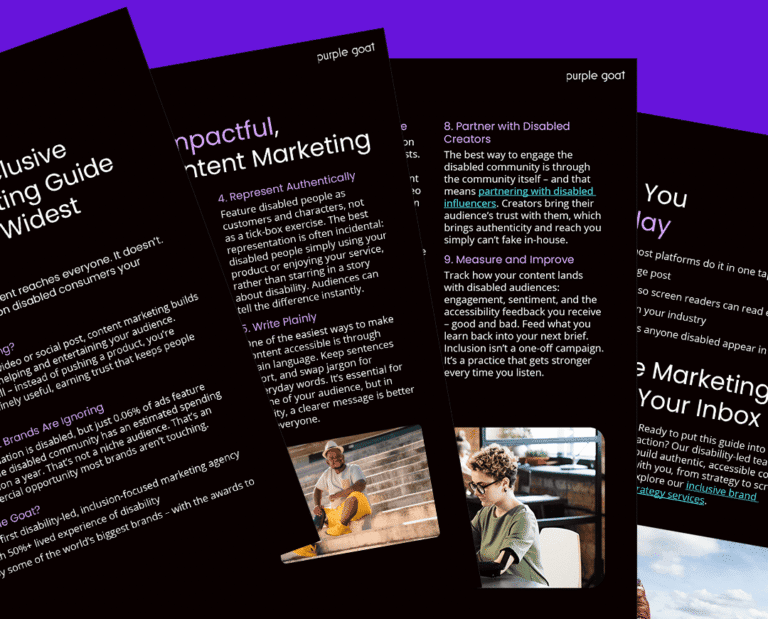
The Ultimate Inclusive Content Marketing Guide: Download Now
Learn how to create content that reaches your widest audience yet.

Visual content can be a really powerful tool. It defines how people perceive your brand, influences buying decisions, as well as shapes society’s views on the world.
As an inclusive marketing agency, we know that getting imagery right isn’t just a “nice to have”, it’s essential. Inclusive imagery isn’t about checking boxes, it’s about authentic representation, and creating something that makes everyone feel like they belong. If they don’t see themselves represented in your brand images, they might not think your company is for them, and you shouldn’t be taking the risk of missing out on potential consumers!
In this guide, we’ll break down what inclusive imagery means, why it matters, and how your brand can start getting it right from today 🌟
Inclusive imagery is visual content (photos, illustrations, videos, graphics, ads) that authentically represents the rich diversity of people in the world. That includes diversity in:
In short, it’s about ensuring that everyone can see themselves reflected in your brand’s visuals.

Even though inclusive imagery is an amazing addition to your brand, too often brands would make these mistakes when not working with inclusive marketing professionals:
Inclusive imagery helps brands become part of something bigger, a cultural shift toward equity and representation.
Like we mentioned earlier, when people see themselves in your marketing and comms, they feel like they belong. And belonging drives loyalty, referrals, and advocacy! If they feel seen by your brand, there’s a high likelihood that they will recommend it to others who are also similar to them (friends, family, followers).
Your brand has influence, and it can really impact society. Choosing to show underrepresented communities in empowering and accurate ways helps challenge prejudice, dismantle stereotypes, and change the narrative. Don’t forget about this powerful tool you have that could change the world!

Here’s how to move beyond performative inclusion and start creating visuals that truly connect with your audience:
Stop defaulting to old tropes, like men in leadership roles and disabled people in a sad narrative. Challenge your own preconceptions and think deeper about how people’s lived experiences. Working with the community and with professionals, like Purple Goat, would help you avoid common stereotypes.
Your visuals should reflect the huge range of human diversity, including different skin tones, body sizes, ages, genders, disabilities, and more.
Ditch overly polished stock photos. Use real people and real stories! Consider partnering with community members and creators to produce some high-quality content.
High-contrast visuals, readable text, and alt-text descriptions make your content accessible to people with visual impairments or cognitive differences. Make it a daily practice to make sure that all your content can be accessed and enjoyed by everyone.
This is a no brainer for us, disability inclusion must be there. And don’t forget that there are both visible and invisible disabilities. Try to avoid falling into inspiration porn or a sad narrative.
It is often difficult to find stock images that showcase good authentic representation, understanding inclusive narratives and what makes an image progressive is key. For example, if you’re looking for an image of a disabled person, you can ask yourself “how is this person represented?” “would the image read the same if they weren’t disabled?” “are there any tropes in the image such as ‘pity’ or ‘superpower’ that we want to avoid?”. If you’re not sure, just ask! We’re always happy to help brands become more confident around inclusion and disability. One thing you could look at doing is organising a photoshoot to make your own bank of inclusive imagery, then work with a specialist agency to make sure that you’re setting up the images and shooting in the correct way.
You won’t always get it perfect, and that’s okay. It’s better to do something than nothing at all. If you’re open to learning, listening, and improving, your audience will trust you more for it.
Barbie’s transformation from a narrow standard of beauty to a celebration of diversity (wheelchair Barbies, vitiligo, Down syndrome dolls) proves the huge impact inclusion can have in our society!
Before publishing your next visual asset, ask yourself:
Inclusive marketing isn’t just about visual content. It’s a whole strategy, from brand voice to customer experience. At Purple Goat, we specialise in helping brands craft inclusive, authentic strategies that connect with real people and give you some amazing business results!
👉 Start your inclusive brand strategy here
Do you want more tips? Follow us on LinkedIn and Instagram for more inclusivity insights.