The Ultimate Inclusive Content Marketing Guide: Download Now
Learn how to create content that reaches your widest audience yet.

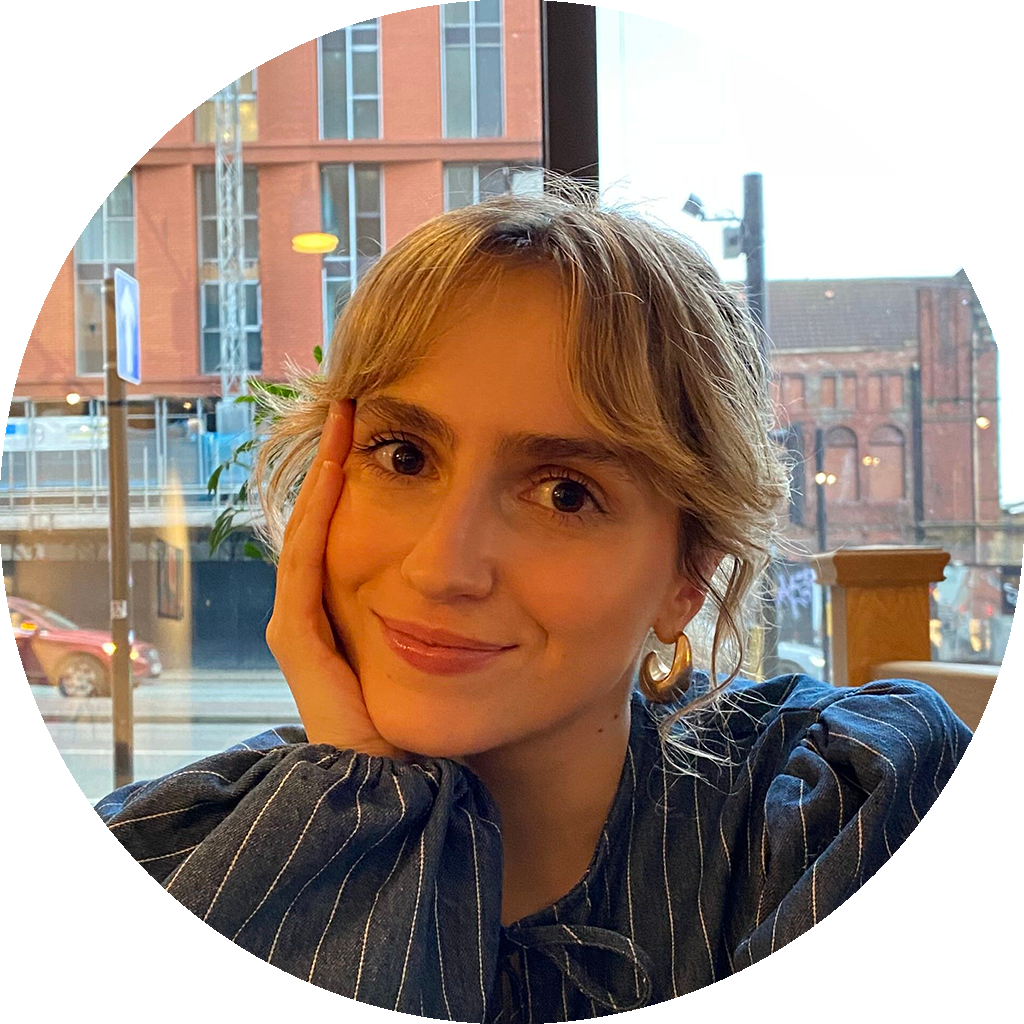
Adaptive fashion is on the rise, and we brought two of the best people in the industry to have a deep dive into it. Kate Maunders is Head of Marketing at Primark, a one-of-a-kind high street example doing amazing things for adaptive fashion and inclusion, and Victoria Jenkins, founder of Unhidden, is an adaptive fashion designer who has collaborated with the retailer in their latest adaptive collection.
They bring all the learnings and insights from their work to The Purple Goat Podcast, and give brands the push they might be needing to start their own adaptive fashion journeys.
{Transcript below}
Kate Maunders:
As a brand, we’ve been leading the way for inclusivity for a really, really long time. Primark has been one of the first brands to step up and do this. Where’s everybody else?
Victoria Jenkins:
To get it into 10 countries, that’s a global first.
Kate Maunders:
Fashion, as we have come to learn as a brand, has been excluding people accidentally for a really long time.
Victoria Jenkins:
Progress over perfection.
Dom Hyams:
Always.
Victoria Jenkins:
Because that’s the thing, if you worry about it being perfect, you’re never going to release anything. In the same way that I saw adaptive clothes years ago, it was like, I don’t like how that’s done, so I’m going to have a go, but it needs to be out there.
Kate Maunders:
This should be happening. This should be happening absolutely everywhere. And I think in a few years time, the brands that aren’t doing it will really have a case to answer to.
Victoria Jenkins:
The most powerful thing Primark has done is just not stop being afraid and just to start somewhere, because you have to start somewhere.
Kate Maunders:
The biggest surprise about the journey was..
Victoria Jenkins:
She hadn’t been able to pull on jeans since she’d been paralysed and she was there crying wearing jeans in the changing room because they’ve not been able to do it before.
Kate Maunders:
If your brand is going to enter this arena, you better mean it.
Victoria Jenkins:
Yes.
Kate Maunders:
And you better back it up.
Launching the adaptive product range was a highlight of my career, hands down.
Dom Hyams:
Hello and welcome to The Purple Goat Podcast. Today we have an amazing episode with fashion designer, Victoria Jenkins and Kate Maunders from Primark. We are talking all things adaptive fashion and the monumental rise of Primark’s adaptive range and the work that they are doing in the inclusion space. It is not one to be missed. Enjoy.
Thank you so much for being here with us today on The Purple Goat Podcast. I’d love to throw it over to both of you very briefly to introduce yourselves if that’s okay.
Victoria Jenkins:
Of course.
Dom Hyams:
Starting with you, Victoria.
Victoria Jenkins:
So I’m Victoria Jenkins. I’m the founder of Unhidden, which is an adaptive fashion brand. I’m an ex- ish garment technologist, so I’ve studied fashion design. I’ve been in the industry now for 17-ish years. I don’t like to admit how many years it is now. And the very proud partner with Primark on their Primark Adaptive Range.
Dom Hyams:
Awesome. Thank you. And Kate.
Kate Maunders:
Hi, I’m Kate Maunders. I am the Global Head of Marketing Communications for Primark. So I look after our social media, our influencer, our talent teams, and our traditional PR teams as well.
Dom Hyams:
Quite a remit.
Kate Maunders:
Yeah, it’s broad, but such fun.
Dom Hyams:
I’ll start with you, Kate. If you can think back to kind of Primark’s journey of inclusion, I’d love to hear a little bit about how that has kind of intersected with sort of wider strategy and where the moment of going, oh, this is something we could, should be doing as a brand kind of came from, and how that journey has kind of evolved over time.
Kate Maunders:
Absolutely. So I think when we talk about Primark as an inclusive brand, I definitely think talking about kind of adaptive and how we’ve been showing up for the disabled community is a key part of that. But I actually think Primark’s journey with inclusivity started far before.
Victoria Jenkins:
Absolutely.
Kate Maunders:
And I think when you look at the talent that we work with, the models that you’ll see in our shoots, in our stores, across all of our content, actually as a brand, we’ve been leading the way for inclusivity for a really, really long time.
And that has been absolutely part of the business’s agenda for a very long time. I think our creative teams have done the most phenomenal job of making sure that inclusivity has been at the front of our customer facing comms because we are genuinely a brand for everybody.
We want everyone to be able to look good and feel good for less. And inclusivity has been a huge part of that. I think the really important part of that sentence is every body. And actually fashion, as we have come to learn as a brand, has been excluding people accidentally for a really long time.
And looking at how we, as a brand, could show up for everybody, and that genuinely meaning our entire customer base, whether people already shop with us or not, was a really, really key part for how we can take that level of inclusion to the next step.
Dom Hyams:
I suppose kind of focusing in on that, when thinking about adaptive wear as a sort of part of that inclusive conversation, what are the considerations that drive you to actually do that? Because of course it’s a big step to make the plunge and do adaptive wear.
Is it the sort of differentiation in your kind of competitive landscape? Is it the commercial opportunity? Is it because we just need to be doing this? Were there particular drivers that meant, no, this is why we’re doing this now?
Kate Maunders:
I think we definitely saw a gap in the market, but I think it was less about commercials and more about inclusion. And actually how as a brand that is welcoming for everyone, do we expand that to be truly inclusive?
And adaptive fashion was very clearly an area that is missing on the high street. And that’s a global truth, right? Primark has been one of the first brands to step up and do this at the scale that we have. And that’s amazing, but it’s also really sad, right? Because where’s everybody else?
We know that this will greatly impact the lives of so, so many people, but we don’t want Primark to be the only place in the high street that you can walk in and find something that has been made to fit your body. So it’s been in the pipeline for a long time and it feels phenomenally important.
And as with anything, we started small because you can’t scale something like this and be effective and impactful and get it right. So actually we started small with underwear. We kind of saw how that went, took the learnings, and then partnered with Victoria to see how we could really go big.
Dom Hyams:
And Victoria, I’m guessing that when that email came in to start the conversations, however it transpired, that for you was probably what your career has been kind of moving towards, or how did that kind of happen and how did it feel for you to end up sort of crafting this with the Primark team?
Victoria Jenkins:
I didn’t realise when I first had the … so when we arranged the first meeting, I didn’t really think it was about a partnership. So it was a bit … I didn’t realise until even after the meeting, my PA said, “You do know they’re pitching at you”. Because they have photos of Unhidden stuff in the deck. So I was like, “Why is that in there?” I was like, “Oh, lovely they’ve looked at what we’ve done. This is great.”
And that’s obviously why Primark did notice me because of the work I’ve done with Unidden. And yeah, I mean, it was an exciting moment. I think that the honest feel was if Primark does it, my business will go out of business. And I think that is and still remains a bit of a fear for some of the other adaptive designers, because to Kate’s point, I actually think fashion has intentionally excluded the community rather than accidentally.
I think there’s now enough awareness. And I’ve been doing this, it’s taken nine years for me to get to this point. There’s plenty of other adaptive designers that came before me and that are still coming up the ranks now. So I think for us, we’re like, no, it’s intentional at this point to not be doing it because we’ve shown the demand. I think we’ve been shouting about it for so long.
So I think for some brands it’s a willing or just an unwillingness to engage with it. So to be able to partner with Primark in such a meaningful way and realise, no, it doesn’t financially impact my own business either, which is good. And it just means now retailers are more interested because to get it into 10 countries, that’s a global first. And to be able to do it for men and women as well, I think is really important because menswear historically is also really neglected on the high street. So to be able to make sure that men have the same option as well.
And the interesting thing for me has always been about the different countries and what’s sold in different countries as well to see like there is a difference and it’s fascinating. So I think all of this just now we actually have data.
I think the other problem every other adaptive designer has, as we have, we can’t go to a pitch investment meeting and give them numbers because there isn’t any. There’s no data. We don’t know how things have sold. There’s no one comparable. So now we’re starting to create that sort of information. I think that’s really important as well.
Dom Hyams:
And kind of on that point of data and feedback, a question to you both maybe, what is the one thing about the journey that surprised you? And then what is one thing about the feedback that you’ve had to date since it’s in the world that surprised you or at least been interested?
Kate Maunders:
Sure. So I think, personally, the journey point of view is the buy-in from so many people around the business, whether that has been product designers learning new skills, whether that has been marketing professionals being taken on a journey, not only with product, but inclusive marketing, which is a huge learning curve for everybody. The buy-in and the enthusiasm and the passion of the teams.
I could honestly say launching the adaptive product range was a highlight of my career, hands down, and I will be talking about it and I genuinely don’t know what could trumpet actually, so I’ll just be talking about it for the next 20 years.
The biggest surprise about the journey was how easy it was to ignite excitement around this, because everyone thinks everything to do with this is difficult and actually there were many things that were, but the buy-in and the enthusiasm to get this off the ground was honestly one of the easiest parts, particularly for my team and my world.
And then I think the learnings off the back of it, might sound cliche, but you just never stop learning. It’s such an iterative process and the feedback loop is so, so important. And whether you’re learning from the experts, whether you are learning from the community, whether you’re learning what launches and lands versus what doesn’t, I think it’s the learning that will … It just keeps going.
Dom Hyams:
Yeah.
Victoria Jenkins:
I don’t know, it’s surprising for me how on board Primark wasn’t really that surprising to me. I think it was what was surprising was seeing when we did launch and all the press and everything and then surprising that so many people still don’t know that Primark does Primark Adaptive. I’m like, “Goodness mean, I’ve been trying my hardest and so have a lot of other people and if we still can’t reach the community, it just shows you, I think in the digital landscape, how hard it is to launch something and get it to the people it’s aimed at.”
I think that was really surprising to me that with all the resources that Primark has, that there’s still people in the community that don’t know that we do it. So it’s just that kind of constant like that loop. And I found that surprising because I really thought that was going to … I mean, it has obviously been a huge impact and we know there’s other high street brands that are now bringing out ranges, which is fantastic. But that did surprise me. I was like, “We’ll never have to tell people about it again because they’ll all know. ”
And so I found that surprising. But the learnings, I had to see like it transform everybody on Primark’s side and just even people that have left and they’ve gone to work somewhere else and then they message me to say they’re trying to tell their teams to get involved with it, I think that has been really amazing.
And it’s just that ripple effect, you don’t know the impact it’s going to have. Even on someone like, there was an intern, I think, that was working at Primark and she now really wants to go and do adaptive clothing. So I think it’s taking the fear out of it has been one of the good learnings. I think Primark definitely were very nervous in the right way. They wanted to make sure they got things right, but I think you’re all a lot more confident now.
Kate Maunders:
100%.
Victoria Jenkins:
And I think the learnings, they’re things that we’re all constantly learning. And yeah, and I think the feedback has been really important, just Emma Lines being able to put on jeans by herself for the first time in her life, just stories like that.
Kate Maunders:
That was amazing. And I think everyone who has worked across the launch of this, for us, that was incredible. And for those of people who kind of haven’t seen it or went aware, Emma was one of our models in the campaign and she is stunning and vivacious and amazing. And she went on a TV show that airs in the morning time, I don’t know if we can say what it’s called and she said our pair of adaptive jeans was the first pair of jeans that I’ve ever been able to put on by herself.
And that’s just something we’re not thinking about when you get dressed. Most of us are thinking, “Can I fit in these jeans today?”
Victoria Jenkins:
Yeah, not just, “Can I get them on?”.
Kate Maunders:
Not can I actually get them on? And I think having those moments that make people stop and think, we have had so many of those internally as a team. And I think to your point around awareness, that’s what we want to do. You just want to stop people in their tracks for a totally different reason, just stopping the scroll or whatever and just going, “I never really thought about this before”. And then starting those conversations.
And I totally agree with you on the challenge around awareness. And I think we will know we have succeeded when you don’t have to give the full blurb of what adapted fashion is because it’s mainstream and it’s everywhere.
Dom Hyams:
I mean, you’re both preaching the PG gospel, so we need to roll you out for some talks that we do. But I think it’s so nice to hear how, as you say, the trickle down effect of … The value is not just making the adaptive wear, it’s how people are then learning in their roles, applying it to their roles, changing what they’re doing as standard.
We see that a lot in the brands we work with where we’ve started in one place and we’ve just meandered into a completely different world, but also unless you are on that journey, you can’t get to that other world without the authenticity of the journey. You need all the parts of the puzzle to be singing from the same hymn cheat as it were. And unless you’ve got that, it won’t have the same impact internally and therefore have that iterative change that you need it to have.
So seeing that buy-in across … I mean, even from the outside, you can see that there must have been buy-in across the board to have this start small grow, grow, grow approach, which you can’t even measure the value of that, I’m guessing.
Kate Maunders:
Absolutely.
And I think your point around authenticity there is so, so true because we didn’t just launch a range of products. That then had to span into what we were doing in store, work that we did with AccessAble to make sure that we’re bringing this product to life, but are the people who are most going to benefit from it, actually able to find it, shop it, use it.
The work that we’ve done across all of our accessibility commitments for both customers and colleagues and the work that we continue to do, and actually we looked at the adaptive range and then went, “What else can we do here?” So whether it’s the extra comfort stuff that we’ve looked at …
So for example, 50% of our kidswear, we’ve now removed the physical labels and it’s printed on the back of the t-shirt because we know that a lot of children have hypersensory issues where they’ve really not enjoyed the feeling of a label against their skin, so we’ve removed it.
Victoria Jenkins:
Yeah. Simple, simple, effective, makes a huge difference.
Kate Maunders:
Huge difference. And actually it’s kind of those small adapts that can be so, so powerful and then are so much more far reaching as well.
Same with seam-free socks, who knew just taking the seam out of a sock could change the mornings of so many parents.
And actually one of the things I would really encourage people to do is like, what are the tiny tweaks that you can do because a tiny, tiny change on one side can have such enormous impacts on another.
Dom Hyams:
Let’s say a brand is watching this and they’ve been debating whether they do this and they just think wrongly like, “Okay, well I just need to see the business case around this and how commercially viable it is”.
You don’t need to kind of explain like the full finances and how things are going, but I suppose is there a way that you’re communicating out to the world about the success of this in a way that anyone understands whether they are the finance guy or the sort of acquisitions guy, whatever it might be, to sort of show the intrinsic value of what you’re doing and how it’s worked from a Primark perspective.
And that might be brand love, brand sentiment, it might be anything, but it’d be great to know if there is distinct metrics you’ve seen that have come about since launching this.
Kate Maunders:
I think it’s about impact there. I think that’s a word that we should really focus on. And I think there’s impact in the community and the power of making people feel seen. And yeah, we can absolutely measure that in terms of kind of sentiment, some basic marketing metrics, level of engagement, number of posts, number of press headlines, reach, all of that really kind of good, tangible, measurable stuff.
There’s impact on the high street and actually this being the ripple effect because Primark launched it, Primark landed it and now we are seeing other brands follow. And that was absolutely the ambition.
So yeah, you can go back to sales data of which there are obviously and have been many sales and you can kind of look at your marketing metrics and your brand health metrics and all of that good stuff. For me, the ultimate aim of this range was not simply to sell product, it was to make a statement for the fashion community and retailers and go, “This should be happening. This should be happening absolutely everywhere.” And I think in a few years time, the brands that aren’t doing it will really have a case to answer to.
Victoria Jenkins:
Yeah. I agree. And you have, like Primark’s done a fair amount of awards for this as well.
And we’re actually both Unhidden and Primark designed with Victoria, both in the same category for Drapers, which I kind of love that we’re both in. Yeah, I know I’m like that. I’m technically up for the same award twice.
Dom Hyams:
That’s brilliant.
Victoria Jenkins:
Which is really cool. But there’s other adaptive brands in there as well, which is amazing to see.
Kate Maunders:
Yeah, 100%.
Victoria Jenkins:
It’s definitely that ripple effect of seeing other brands take on. And from day one, Primark always said they didn’t want to be the only ones doing it. It was very much a come on the same journey with us and share learnings. But I think what they, obviously I personally think what they did right was to bring in someone in the space to do it with them.
They went from four pieces on the lingerie range to a year later, 49 pieces. And the only way to do that at that speed was to engage with someone who’s kind of done the work already so it can make it a bit easier and a lot faster because you want to take another two years to bring out updates and more things to the range.
So I think that’s what the brands also need to keep in mind is don’t do it in a vacuum and don’t make any assumptions.
Kate Maunders:
100%.
And I think that’s one of the reasons that the collection landed so well. So actually talking about that, that sentiment piece, every single piece of coverage we received across national newspapers, across social, was positive and absolutely people had questions and there were learnings and there were things we needed to kind of reply to and develop, but it was an overwhelmingly positive launch because we did it in the right way. We didn’t rush it.
We engaged the experts, we engaged the community and we listened and when we saw something wasn’t going to work, we adapted literally and changed how we were going to show up. And therefore when we launched, I can’t think of any kind of feedback that we had around the product that was specific apart from we want more.
Victoria Jenkins:
Yes. Yeah. They want more. Yeah. Well, I mean, I know people still wanted it in every store.
Kate Maunders:
Yes, that’s very fair.
Victoria Jenkins:
But I mean, we’ve obviously spent a lot of time trying to explain like no range launches in every single Primark store when you do any kind of new range because you don’t want to overproduce. I think it’s really important to me that people understood …
It’s also like from a sustainability point of view with Primark of actually not overproducing. And you don’t know if it’s going to sell well until it’s actually in the store. So if it doesn’t, you don’t want to have so much leftover stock. So I think that was really important that they committed to that as well.
And then they have the click and collect and people are like, “Well, it should be able to be delivered home.” That’s not the business model that Primark’s built on. So that’s, yes, we know you want it and there’s lots of brands trying to do this for you, but I think there’s … I don’t know. I think there’s a lot of pressure for Primark to do absolutely everything all at once correctly.
And I think Primark is being really good at saying, “We can’t do this this way, but we’re sort of listening and learning.” Like every single event they’ve done, there’s been feedback and everyone that they’ve got comments about their clothes, they take that and we have conversations about it in product development meetings.
Kate Maunders:
Yeah, absolutely.
Victoria Jenkins:
So like every single point in Primark, it’s like ears open listening, but there’s just some things that just can’t be done.
Kate Maunders:
Fair. Yeah.
And a brilliant example would that be someone was talking about a men’s coat for winter. So now we’ve got a parka coming in for autumn/winter in the men’s range.
Victoria Jenkins:
It’s lovely as well.
Dom Hyams:
I think you mentioned almost the power of being relatively transparent about the journey around and can’t be all things to all people instantaneously. And the one thing that we often share with external sort of forums is, well, if you had a new product tomorrow, do you demand it to be fully accessible to everyone right away?
And we give them the binary choice of yes or no. And we ask them in real time to give us an answer and often people are panicked and they go, “Yes, you should.” But our answer would be no, but because how do we get to that point of innovation where we allow enough people to come up with great ideas and iterate and develop them?
And yes, you can’t do everything all at once. You don’t have the click and collect. But again, as a brand, probably just being quite open and vulnerable about where you are on the journey at any given time probably is quite powerful and that’s how we kind of communicate it.
There’s a power in that open confidence of the journey that you’re on and the iteration that takes place.
Victoria Jenkins:
Yeah. Like Charlie, the Head of DEI always says, “Progress over perfection.”
Dom Hyams:
Always.
Victoria Jenkins:
Because that’s the thing, if you worry about it being perfect, you’re never going to release anything.
And something can always be improved, and there’s so many amazing creative thinkers out there that can see one front and be like, “Well, I could do it differently.”
When I saw adaptive clothes years ago, it was like, “I don’t like how that’s done, so I’m going to have a go.” But it needs to be out there for you to be able to then comment on it to then improve the product.
But yeah, I think, like I said, Primark has always had open ears to everything. And it is quite scary because our community, we know we’re quite forceful when we’re angry about something, and it is terrifying. I still get terrified. Every post we put out, I’m like, “Is this going to be the one where everyone has a go at me? Because I can’t speak for a billion people and growing, I can’t, I’m not always going to get it right.
And I had to sort of reassure with Primark because you won’t get it right even with every expert in this space, we’re going to get it wrong, you’re going to get it wrong. It’s just part of it, but you can’t let that stop you from doing it. And I think that’s the most powerful thing Primark has done is just not stop being afraid. And just to start somewhere because you have to start somewhere.
Dom Hyams:
Absolutely. Again, I’ll steal you both for that kind of one liner too.
Victoria, for you, as someone that’s been doing this for many years, I suppose it’d be really interesting to know how, where you see adaptive fashion when you had originally consumed and started to work on it as a thing, as an industry, as a part of society, how that view in your mind has changed from when you started to now it’s moving into the mainstream retailers and again, you’re getting feedback. How has your perception of what the industry can and should be changed over time?
Victoria Jenkins:
I mean, what it should be, I still don’t feel we’re there. I think we’re a very long way from it, but I never thought I’d see it on the high street. I was quite cynical. It taking years and a lot of nos and I didn’t think I’d be seeing adaptive fashion high street, much less that it would be with a household brand name and that I’d be involved in it.
I thought, oh, there’d be somebody else that comes after me that does this. So now I’m like, well, if we’ve done that, sky’s the limit really, but there are still so many conversations that I have to just try and get people to understand why it’s important.
And I think the fashion industry, especially when you look at Fashion Week, because obviously I try and be part of that from a representation point of view and to make sure adaptive fashion is still kept in the conversation each year, but in terms of Fashion Week, I don’t think they necessarily need to focus on adaptive clothing versus retail, which I think does because I think fashion, it is representation and it is the extravagant clothes and all the glamour of it.
I think to say people still need to feel seen in that space in luxury. I don’t know that we’re quite in a space where we need to be sold £3,000 dresses. So much like I would love to come out with these sorts of things, but you have to look at the end consumer and how likely it is to … You might make only one of those and sell one of those.
So high fashion, I think they need to step up in representation and their advertising, their digital accessibility, their spaces, they don’t make anyone feel especially welcome, but I think with our community in particular, like literally there’d be a … I’ve seen that face on them sort of being like, “No.”
I mean, when I first talked about Unhidden, somebody was like, “Oh, no one’s going to want to see that.” And I don’t think that has really changed that much, but I think retail has really done leaps and bounds, but it’s still, you know, it’s the public transport to get to stop to shops.
It’s how shops are designed and there’s still so much retrofitting that has to be done in retail spaces. So I feel like any new build now that isn’t accessible, they just need to fire everybody involved because it’s just getting … I mean, it’s literally law to be accessible. So I find that really frustrating still.
And I think that’s what fashion could lead the charge on because it can be exciting. You can create a feeling and an emotion and a movement really easily with fashion. It has a responsibility. And it’s also that point of it’s more sustainable to design clothes that more people can wear than designing a new pair of trousers in a lovely fabric with a fancy print that not everybody can wear. So I think from a sustainability point of view, it actually helps if more people can use your product.
Dom Hyams:
Absolutely. And to your point on high fashion, we actually, and I might get in trouble for saying this, but we recently did a campaign with Guidi, they make the lovely boots, and they were just really open to us doing a really nice, natural, representative, diverse mix of Guidi wearers and it performed really, really well and the sentiment was really, really powerful.
And to your point, I think that there’s an open realisation and honesty around the fact that yes, big luxury fashion brands are not going to design necessarily like hyper bespoke, accessible things for certain people, but they can take the learnings of what you guys are doing and bring that into the way they design.
But also, that’s why, for example, you exist as well because someone that wants a luxury item in the style can go and get an adaptive. My jacket is made by a tailor that I’ve had for years and years and years and I don’t anticipate anytime soon I’m going to be able to go to a luxury designer and get that same jacket, you know what I mean? So it’s also knowing that there is difference in certain aspects and making sure that we celebrate diversity through luxury fashion and make people realise the value of that.
Victoria Jenkins:
I think the problem we still have is we’re meant to accept crumbs.
So I’m getting a bit furth up of seeing like one brand use a model once and then you never see it again. And it’s in a campaign, it’s not on the website, it’s in the editorial, but it’s not in the eCommerce. And that’s what Primark does beautifully as well is they were using diverse models before you even had the adaptive clothing and then the e-com shoot and the campaign shoot had both and they already, they’ve been working with half of them before anyway.
And I think that’s what luxury fashion needs to do is not expect us to applaud for the very little that they give us because this is something they should have been doing anywhere. And I think there needs to be that acknowledgement of they’re not going to get the reward, especially if they haven’t already started, but they certainly shouldn’t expect us to be applauding them for doing something they should have already been doing when it’s 2025.
Kate Maunders:
It’s also just smart branding though, right?
Victoria Jenkins:
Yeah.
Kate Maunders:
Because you see multiple book brands who play, and I’m going to use the word play in this space, and it backfires because they do ridiculous things like put blades on mannequins and then refuse to sell one shoe. So put your money where your mouth is, right? That’s what this is. If your brand is going to enter this arena, you better mean it and you better back it up, say it with your chest.
Victoria Jenkins:
One of my favourite was there was a product brand and it’s like not cosmetics, but it’s in Superdrug, Boots, that sort of place, and they put braille on the bottle, but the braille just said what the brand name was.
Kate Maunders:
Stop. Oh, that’s so poor.
Victoria Jenkins:
It didn’t say if it was shampoo or condition or shower gel. It was just braille for the brand name. And I was like, wow, you got all the way through product development, launching it, and then everyone’s just going, “Well, that was stupid, wasn’t it? ” And that’s again, you can show us when you haven’t engaged with the community when something like that happens.
Dom Hyams:
And also braille is also one part of the puzzle that a very small percentage of that community actually use it nowadays.
In terms of like, you both kind of touched on the fact that there’s almost this sort of development in the understanding of how all brands should approach inclusion and you guys are a very good example of showing the places and spaces you have to show up to be that authentic brand nowadays, and brands can quickly potentially come unstuck if they don’t approach it in the right way.
If we look forward, what do you think is going to happen if you both have your crystal ball in and around the conversation of inclusion and fashion over the next three, five years?
Kate Maunders:
Three or five years ago, Primark wouldn’t have been in the position we are now. We know that.
And actually where we’ve come in the last three to five years has been remarkable. And I also think that should be used as, not necessarily a case study, but like if Primark can do this, I really hope there’s other retailers looking at us and going, “Well then so can we.”
So actually my wish or crystal ball for the next three to five years would be that we are not alone on the high street, that we are fighting off the competition, that we have to be bringing more and more product to market in more and more styles, seasonal launches, et cetera, because we want to remain your shop of choice for your adaptive wear, even if you have so many, you know, other options. That’s the dream.
Victoria Jenkins:
Yeah. I think for me, the dream is that it’s everywhere to the point that maybe I don’t know that we’ll ever really be able to drop the term adaptive because how are people going to know that it’s for you if you take that word out? If you just say it’s jeans, I’m like, actually these jeans are a bit different. You do need to be able to communicate that I think to a consumer. But to be a point where it’s not a new launch of adaptive, it’s just a new launch of clothes to some degree. So it’s not always that other thing that can so easily happen.
And I do think we’ll see some really fun brand partnerships across all the adaptive designers that are out there. I think we’re going to see some really interesting and exciting things. And I think Primark’s leading the way by partnering with other designers in the space I think is going to be really transformative. And having it just normalised, that’s what I hope for. The reality is who knows? Who knows what’s going to happen?
I know I want to have homeware, swimwear, shoes. I want to do all of it, but so does everybody. So I think it’s whether or not that’s going to happen in the next five years, I don’t know.
Dom Hyams:
That was going to be my next question too, was just for you personally, what’s the bucket list kind of, maybe not project, but maybe item that you have on a horizon that no one’s doing.
Victoria Jenkins:
I want to do shoes.
I want to do shoes so bad. Because there’s like six adaptive footwear brands. And again, I know some of them and they’re incredible, but they are majority trainers. So I want to kind of apply my design aesthetic onto adaptive shoes. I really want to do shoes and homeware because I think it’s quite fun and like ergonomic and like nice looking homeware that has all these different things like built into it.
I have been looking already. So like I know what I want to do. It’s just having someone to do it.
Dom Hyams:
Homeware for me is in that same category as when you have like adaptive bathrooms and 99.9% so utility and ugly.
Victoria Jenkins:
I’m sick of seeing ugly mobility aids in any shape or form. Like no, I’m not here for it anymore. Let’s redesign the lot. And then you just go out in the world and you just think, well, everything needs redesigning. So I think that’s kind of the bucket list, that and nicking the Paralympic contract off Adidas. Why not? Oh yeah, that’s what I want.
Dom Hyams:
Aim high.
Victoria Jenkins:
But I mean I say that. I’ll do any country that needs it because I think in the last Paralympics there were 78 countries. One had adaptive open ceremony costumes and what they actually competed in.
Kate Maunders:
Wow.
Victoria Jenkins:
And that was Canada.
So I’m like, I’ll do any country. All of them.
Dom Hyams:
Just on the actual like community buying and community understanding, you mentioned earlier around still you struggle to get the cut through of people actually understanding that the products maybe even exist. I think one thing that we always talk about with clients is whatever the community is doing right now is something. And so we have to try and get them to change their behaviour to almost entertain the idea.
There’s a sort of risk factor or opportunity cost to trying something new, paying for something new. I suppose a final kind of rallying cry. What would you say to the people that might need adaptive wear, might want adaptive wear, but have never tried it before?
Victoria Jenkins:
To give it a go, to give it a chance, I think. And to look for it, I think it’s still getting the word out there with adaptive, even though it’s been being used for I think almost two decades, if not longer now. People looking for disabled fashion or type in disabled fashion, but that’s usually just talking about the model and not the clothes.
So I think that cut through, like you say, is still quite difficult, but I think people should try. And there are so many designers out there. That’s the thing, and it’s global and it’s growing. So I think that the important thing is to have a look, read reviews, maybe ask somebody else. I mean, it’s a faff buying anything these days and having to return it, but if it gets you into a new and more comfortable way of living, I think ultimately the reward is there.
People being able to pull clothes onto themselves without having somebody else do it for them. I think that’s a game changing moment. I had somebody else sent me a message. She hadn’t been able to pull on jeans since she’d been paralysed and she was there crying wearing jeans in the changing room because they’ve not been able to do it before. And I think there’s moments like that. Once you know that that’s what the clothes can do for you, that it’s that getting them to understand that it’s only being created for their benefit.
It’s not, if it’s done correctly, it’s not to be exploitative and just to take money out of everybody’s wallet. It is being done with the right intentions by like 99% of the people doing it.
Dom Hyams:
Thank you both so much for your time. Genuinely, really, really appreciate it. But also like in what we do at Purple Goat and particularly in this podcast is really want to celebrate and show other people when things are being done and being done really, really well and inclusion can not be a chore. It can be exciting, fun, creative, and incredibly rewarding for both brand and consumers alike.
Dom Hyams:
So genuinely thank you for all you do, but also thank you for coming today. Is there anything you guys would like to share with the audience as a sort of final thought or something that we’ve not yet talked about that you wanted to cover?
Kate Maunders:
I think if you’re a brand listening to this, just start.
Dom Hyams:
Yeah.
Kate Maunders:
Make some good connections on LinkedIn. Go to inclusive marketing events. Just have a look what’s out there because there are so many events. There are so many people who are already in a space who are really passionate about it. I guarantee if they’re passionate about it, they want to talk to you about it because they see the value in it. Start somewhere, get people excited, get the right people in the room. Don’t talk for a community.
Victoria Jenkins:
Let the community talk.
Kate Maunders:
Absolutely. Really important.
I think one of the things I’m most proud of Primark for is that, as we said earlier, every single person who’s done this is now so passionate about it and they’re spreading the word and they’re talking about it, but they’re also learning skills that will serve them for the rest of their career, whether they stay with Primark or go elsewhere. And I think the ripple effect of what we’re doing can’t be underestimated. And I am so excited for what is to come for individuals in this space, for consumers in this space and brands in this space.
Dom Hyams:
Thank you.
Victoria Jenkins:
Very well put.
Dom Hyams:
Thank you very much indeed. And have a lovely rest of your day.
Thank you very much for watching the Purple Goat Podcast. Please do like, subscribe as there is plenty more of this coming in the very near future.