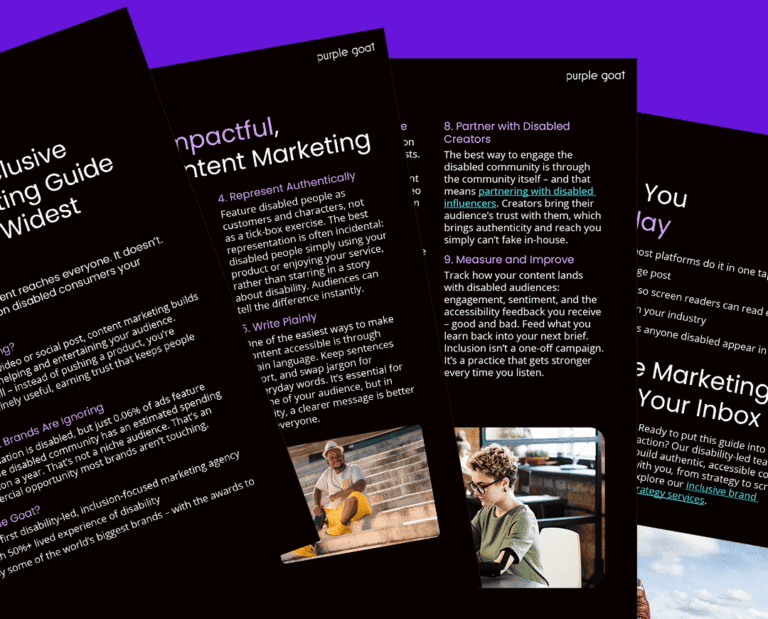
The Ultimate Inclusive Content Marketing Guide: Download Now
Learn how to create content that reaches your widest audience yet.


New year, new marketing trends 🌟
As we step into 2025, accessibility is becoming a critical component of effective marketing strategies. Inclusive marketing doesn’t just reflect good ethics, it also boosts brand loyalty, expands reach, and aligns your campaigns with diverse consumer needs.
Creating accessible marketing content is not something your brand can ignore in 2025.
And ensuring your marketing trends for 2025 are accessible will help your business stand out.
In this article, we’ll explore 9 key marketing trends for 2025 and provide actionable tips to enhance accessibility across every strategy.
But if you’re new to accessibility or want a little refresher lesson, let’s start from the beginning.
Accessible marketing refers to creating campaigns, content, and experiences that are inclusive of everyone and that everyone can enjoy. This means designing visuals, videos, audio, events and text that accommodate diverse needs, like those of the Disabled community.
Accessibility is a must-have for all businesses out there, but as society becomes more and more digital-first, it is becoming even more essential.
In 2025, brands that prioritise accessibility will lead the way, creating more meaningful connections and driving long-term success!

Nowadays, it is not unusual to hear someone say ‘let me search on TikTok’ instead of ‘let me search on Google’. Social media platforms are becoming powerful search engines. Platforms like Instagram, TikTok, and Pinterest now prioritise search-friendly content, with users increasingly searching for products and answers directly on social media.
AR technology allows brands to create interactive, immersive experiences for consumers, such as virtual product try-ons for makeup and glasses, and AR-enhanced advertisements to stand out from competitors.
We’re in the post-pandemic era, and in-person and hybrid events are back in full swing. From brand pop-ups to live shopping experiences, consumer events will dominate marketing in 2025 and allow brands to engage directly with their customers.
Consumers are craving authenticity, and unfiltered, behind-the-scenes videos will continue to grow in popularity. Think: TikTok trends, day-in-the-life vlogs, and raw storytelling.
Generative AI will play a significant role in creating personalised brand experiences, including AI-powered filters, tools, and recommendations. However, it’s also interesting to consider how AI views disabled people!
Smaller influencers with niche, loyal audiences will dominate influencer marketing. Micro and nano influencers offer high engagement rates and authentic connections with their followers.
Brands are moving away from one-off influencer campaigns and focusing on long-term relationships to build trust and brand consistency.
As voice assistants like Alexa, Siri, and Google Assistant become more advanced, voice search will continue to grow in popularity.
Brands will increasingly blend paid media strategies with influencer partnerships to amplify their campaigns and drive conversions, it’s a great way to maximise visibility and ROI.
To succeed in 2025, brands must embrace emerging marketing trends while ensuring their strategies are inclusive and accessible. Whether it’s optimising social media campaigns, collaborating with influencers, or innovating with AI, AR and the latest technology, accessibility must remain at the heart of your approach.
Learn how we can help your brand thrive with inclusive, accessible strategies. Explore our Inclusive Marketing Services.
The future of marketing in 2025 is defined by personalisation, technology-driven innovation (like AI and AR), and inclusivity. Brands that prioritise accessibility and representation will build deeper connections with their audiences.
Experiential marketing in 2025 will focus on hybrid events, interactive AR experiences, and immersive campaigns. These events will prioritise accessibility to ensure everyone can participate.
Content marketing trends for 2025 include authentic videos, AI-enhanced storytelling, and voice search optimisation. Inclusive, accessible content will remain a priority for brands looking to reach wider audiences.