The Ultimate Inclusive Content Marketing Guide: Download Now
Learn how to create content that reaches your widest audience yet.
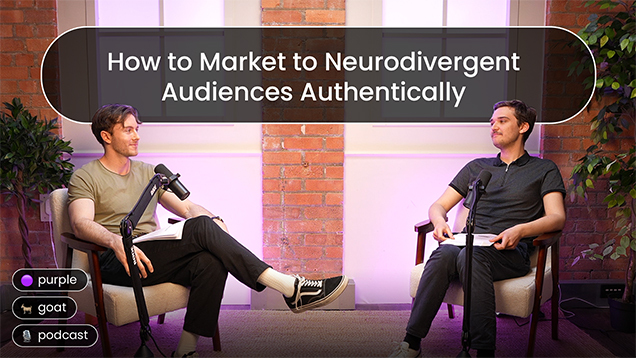
How can brands market and engage with neurodivergent audiences? How to avoid stereotypes and create something authentic? And what are the benefits of doing anything at all?
In this episode of The Purple Goat Podcast, Luke and Bill walk you through the what, why and how so you can create marketing campaigns that have your Neurodivergent audience in mind, are authentic, and deliver strong results.
{Transcript below}
Luke Trower:
Is there an obvious solution to this? Is there something obvious that brands can do to engage with the neurodivergent community in an authentic way?
Bill Urquhart:
Many people would say that the most valuable thing you can do for many neurodivergent people is actually not to do with representation at all.
Luke Trower:
So to me, when thinking about the obvious solution, I probably took a more cynical approach to what the obvious approach would be to a business looking to engage with the disabled community, with neurodivergent people specifically in this case.
Bill Urquhart:
It’s not about a kind of one and done effort, is it? It’s about a kind of continued approach where you try and look at every angle of your business and see how different people are interacting with you.
Luke Trower:
Those are the things that I would like to know those companies are doing so that I can feel comfortable making purchasing decisions with them.
Luke Trower:
Hello and welcome to The Purple Goat Podcast. I am Luke, the Design Manager at Purple Goat.
Bill Urquhart:
And I’m Bill, and I’m a Strategist at Purple Goat as well.
Luke Trower:
Today, we are going to be talking about neurodiversity in marketing. And by that we mean the representation of neurodivergent people in marketing, as well as the way in which companies and brands interact with neurodivergent people.
Bill and I have decided to come together today and do an episode on this. The reason being is that essentially we both have some good sides to this that I think we can both pull out. I have the lived experience of being autistic and you, Bill, you have a lot of background and knowledge of the space of working with clients, shaping campaigns in and around neurodiversity with companies.
Bill Urquhart:
A good description. Yeah.
Bill Urquhart:
I mean, we’ve had this sort of in the pipeline for a while in terms of something we wanted to talk about, didn’t we? And in terms of I think where we start, it’s quite important probably to just talk about what neurodiversity is kind of in the first place, isn’t it? Because it’s actually quite a hard thing to pin down.
I mean, what if you were going to describe it quite as succinctly? Give you a challenge straight out the gate, what would you say?
Luke Trower:
I think it is quite challenging.
And I think it’s something that when I think about my lived experience, it’s something that I think it’s really hard to pin down. And I think the reason why it’s hard to pin down is that there are definitely the cognitive aspects to neurodiversity that are pretty evident by the terminology of the title.
But I think what makes me not want to see it as just like thinking differently or processing differently, which are aspects of it. But I think with particular divergent conditions such as me and my autism, it’s not just about how my brain processes things differently. There’s also sensory stimuli, how I react differently to environments and situations, which I think comes into it as well. It can affect me in physical ways as well as mental or cognitive ways. And I think that’s sometimes not discussed as much.
And I think when we think about the social model of disability as well, which is what we are always talking about at PG.
Bill Urquhart:
Of course.
Luke Trower:
It definitely reflects those ideas of it not being purely about not being purely mental, because when we think about environments and how environments set up by society, businesses and people in society can impact upon people such as myself.
Bill Urquhart:
Sure. Yeah.
I think there’s certainly a kind of common misconception, probably more prevalent among non-disabled people that neurodivergence is something that exists solely in the brain where it’s, as you pointed out, I think probably the thing that links neurodivergent conditions together is something more to do with processing, whether it be sensory or in the brain or some combination or even something else.
So it’s quite … I mean, when we’ve talked about this before, you’ve sort of spoken about the fact that talking about neurodiversity as a whole, as a kind of sum of neurodivergent conditions, maybe isn’t actually that useful to talk about. And we should instead reflect on kind of specific neurodivergent conditions in and of themselves in more siloed approaches, although of course they do cross over in many ways.
Luke Trower:
Yeah.
And I think going into this podcast as well, I think that’s something very important to establish at the start, is that because diversity is such a broad human experience and it impacts upon people’s lives in so many different ways.
I think it’s important to make very clear from the start of the podcast that when I speak, I’m speaking from the perspective of an autistic individual, like with any condition that we would talk about within the disability space, I can’t talk about, I can’t speak for everyone with autism, let alone every neurodivergent person because at that point there’s conditions such as ADHD, dyspraxia, dyslexia, Tourette’s, other conditions which I may or may not have any lived experience with as well, and I would never want to talk for those communities. And I think that’s an important, linking to that as well.
There’s a secondary important point as well to bring into that, which is that quite often autism and ADHD historically have probably had larger spaces within the conversation than perhaps other neurodivergent conditions.
And I think these sorts of things are important to bring up at the start when setting the scene, when we think about some of the examples that we might talk about today in the podcast.
Bill Urquhart:
Certainly.
And I think just having raised that point yourself, I think it’s worth noting that I’m neurotypical in many sense of the word, and I’m certainly coming at this from a perspective of curiosity and allyship and having worked in this space in disability advocacy for over a year now, it’s quite an interesting position to be for me and I’m very interested to see what we come out with in this conversation.
Bill Urquhart:
Without further ado, I suppose having kind of established a bit of the what, it’s worth asking a bit of the kind of why in terms of why we’re focusing on neurodivergent conditions and neurodiversity specifically with this conversation. And I think one of the obvious answers for us is that in the scheme of disabilities, there does seem to be comparatively a little bit more stigma attached in society, perhaps to neurodivergent conditions compared to some other disabilities.
And I suppose my first question is, why do you reckon that is?
Luke Trower:
I think stigma can come from very different sources.
I think personally from the things that I’ve seen that have impacted and that I’ve interacted with, there are certain ways in which media as a whole, and wider media representation, can play a part into people’s, especially the public’s perception of how neurodivergent conditions manifest in people.
I think the thing is when companies are thinking about this particular area and how to approach it in terms of their marketing, it’s often seen as an invisible disability, which means that people, quite often, businesses, struggle to interpret in the right and the most authentic ways how to interact with that community in a way that is visible, because partly they want to be seen as being an ally for neurodivergent people, but I think the real point of tension that sometimes these businesses can face is they’re unsure how to approach invisible disabilities such as neurodivergent conditions in this visible way.
And so in the past, what we’ve seen is when companies have done this and they haven’t consulted neurodivergent people in their marketing and comms, it has led to inauthentic representations of disabled people, neurodivergent people.
And then I believe that that would have a snowball effect where we have these negative public perceptions and then as they sort of roll on, if there’s negative feedback, there might be a stigma that these businesses don’t want to approach those topics because they have a fear of backlash from doing it in the wrong way or other companies from the outside who haven’t done this before, they see other examples and instances that are either inauthentic and either think that’s the right way to do it or they see that it’s the wrong way to do it and they’re not quite sure how to do it themselves.
Bill Urquhart:
I totally agree.
And I think there’s definitely a layer of kind of complexity laden with neurodivergent conditions, isn’t there? In a sense, because they are so personal and every single person’s relationship with their own condition is completely unique.
And so for brands or society at large, and people trying to engage with neurodivergent individuals, it can, I think, probably be perceived as being quite inaccessible, certainly compared to maybe a disability that is very clearly visible and you can kind of point to and identify and that sort of thing.
And the fear of perhaps getting it wrong or offending or appearing ignorant, these rule things which can lead people to kind of withdraw and maybe sort of fail to engage rather than try and do it and sort of make mistakes and ultimately come off badly. So it’s a complex issue, isn’t it?
Bill Urquhart:
So in terms of representing invisible disabilities, I think one question that is a challenging one is like, if you do it well and say it sort of goes under the radar because it’s an invisible disability and it’s great representation, but it is kind of normalised representation such that there’s no flashable light above somebody’s head saying, “This is a disabled person,” is it still worth doing for brands?
Firstly, and then secondly, is it still worth putting money, all this money that takes to run advertising and marketing campaigns specifically around representing marginalised audiences and neurodivergent people if nobody’s going to notice at all? A lot of the time, the only way that these sort of things can get the green light is if obviously there’s a massive great PR opportunity alongside it as well.
Luke Trower:
I think the answer to that is yes.
And I think that for more than one reason, I think there is obviously the case that it is the right thing to do by society, by neurodivergent individuals, and so companies should be doing it anyway.
But on top of that as well, I think the best and the most successful of these campaigns not only are instances where neurodivergent people are showcased, or neurodivergent people are included in the conversation, but it’s also met with action because actions are as important as showcasing neurodivergent people in marketing and comms as well.
And so when it comes to companies doing these things that may on the surface appear invisible, backing that representation up with additional layers such as providing accessibility adjustments within stores, within products and services that are tailored to neurodivergent people, it’s not about the way in which those companies are doing things for themselves, but it’s also those companies taking a role in leading society, and hopefully other businesses as well, in creating a more equitable society through things such as quiet hours in stores, for example, things that they might be hesitant to do in the beginning, which can in the long run create wider societal impacts.
And as an inclusive designer myself, I know that those things, they don’t only benefit their people they’re aimed at, they benefit wider groups of people beyond that too.
Bill Urquhart:
Yeah, certainly.
I think that’s a really important point because, obviously, representation is one sort of side of the coin, but I’m sure many people would say that the most valuable thing you can do for many neurodivergent people is actually not to do with representation at all.
And as you say, it’s kind of about providing reasonable accommodations and specific features of your services that would suit them and allow people to engage with your products or services no matter who they are, right?
And representation alone doesn’t do that. And so that kind of feeds into this … I mean, we always talk about this at PG, but it’s not about a kind of one and done effort, is it? It’s about a kind of continued approach where you try and look at every angle of your business and see how different people are interacting with you and then accommodate those people in a way that works for them.
Briefly going back to representation, because I think depending on the product or services, there may be ways in which you can support neurodivergent individuals beyond representation. But certainly, I think for many brands and businesses, representation is probably going to be the first step, isn’t it? I mean, in terms of improving kind of DE&I practices within the disabled community and beyond, it’s certainly a quick win and something that is really powerful that you can do.
Bill Urquhart:
In terms of invisible disabilities and whether there is a kind of obvious solution, I know we were considering this, we actually had different ideas about what the obvious solution to this problem was and whether or not it worked. Do you want to go through your obvious solution to invisible disability first and whether or not it works?
Luke Trower:
Well, I think probably to spoil a little bit and preempt a little bit of what we were talking about before the show, but essentially we both had the … I think we both had the same idea of what was the best solution, but our viewpoints differed on whether or not that particular solution was obvious.
Bill Urquhart:
Yes, or at least we came from very different perspectives, didn’t we?
Luke Trower:
Yeah.
So to me, when thinking about the obvious solution, I probably took a more cynical approach to what the obvious approach would be to a business looking to engage with the disabled community, with neurodivergent people specifically in this case.
And to me, the obvious solution would be based around things that we have seen historically more large scale representations of neurodivergent people, things that are probably a bit more stereotyped and a little less nuanced. Things where the neurodivergent community haven’t been included within the conversation beforehand.
And to me, when it comes to that being the obvious solution when we think about the more mainstream ways in the past in which this has happened, I don’t mean this is obvious in the sense that people are intentionally doing these things. I don’t think people are intentionally not including the neurodivergent community because that’s the best thing to do and they know that that’s the thing.
But I think for them, it’s the most obvious solution because it’s the one that’s probably the most streamlined with current practices, current ways of thinking, not just about working with the disabled community, but in wider marketing campaigns as well.
I think when you’re approaching these campaigns that involve audiences like the neodivergent community, it probably differs from a traditional marketing approach in that there’s a different pipeline in how those sorts of campaigns should manifest, how they should come about.
And so to me, I believed that the obvious solution was actually not a good idea, was actually not the best solution because it’s based in systematic ideas from the past.
Bill Urquhart:
Yeah, absolutely.
And when we sort of reconvened to discuss our notes, I think we found it quite interesting how we interpreted the question, didn’t we?
For me, obviously, I thought about this from the perspective of a Purple Goat Strategist within my own brain, if you know the material, work with it. But I saw the obvious solution as, well, obviously what you do is you work with the community from the start, you flesh out a campaign that is kind of built for and around them and it sort of involves them at every stage and you sort of do something that has loads of budget put behind it and specifically speaks to an issue that is both relevant and topical for the community, but is also highly relevant and ownable for your brand.
And you kind of create this really tight, intrinsic link between the issue and the brand and the community, and maybe it goes to a great cause as well. And it’s all this kind of lovely, happy, award-winning, show-stopping piece of creativity and marketing for me, that was the obvious solution.
And similarly though, I also thought that it often doesn’t work like that. And there are very few campaigns as we have kind of tried to scour our brains and the internet for that actually satisfy this criteria.
I think we’ll go onto one in a few moments, but obviously the reality of the situation is that most of the time people don’t have these entire marketing budgets to put behind such a kind of niche issue that perhaps doesn’t have the justification in the eyes of the C-suite and so on, at least not yet.
So kind of using that argument and saying, “Well, this is what you should do or this is the obvious solution, probably isn’t as effective,” which kind of leads directly into the question of incidental representation. And we already touched on this a little bit, but the fact that we would still argue that incidental representation is still such an important thing to do in your plan, whether or not it kind of goes noticed by the wider public.
And obviously there has been historically a massive kind of employment gap in terms of disabled and non-disabled talent. And so there’s certainly an argument, even in the short term, that even just employing disabled people goes a long way to furthering sort of society at large, but also it becomes something that eventually, assuming this is part of a kind of wider network of diversity efforts within your brand, something that you can talk about and be proud of.
And often at Purple Goat, we encourage brands who are doing great things to talk about the great things they’re doing because it can be quite scary to kind of feel as if you’re boasting. I think that is a common kind of fear that brands have.
Even if they’ve been going by the book and we’ve been working with them, they don’t necessarily even want to talk about what they’ve been doing because it feels like hubris, but actually it’s a great thing to do. Not only does it alert the community to the fact that you’ve been supporting them and kind of probably attracts some new customers, but it also kind of puts the proof in the pudding and sets the precedent for other brands to kind of do the same thing.
If your biggest competitor has this sort of massive wide reaching inclusion practice, maybe you’d start doing it as well, sort of match the edge. What do you think about that? Is that sort of aligned with your views on the subject?
Luke Trower:
Yeah.
And I think with everything you said there on a wider level, I think that’s definitely what we would both say is the best way of doing things. And I think that’s …when we think about the idea of incidental representation from a lived experience point of view, rather than myself as a marketer, I find it’s in those little moments when I notice a neurodivergent character or representing a neurodivergent person in a marketing campaign.
Those little moments are, for me, what makes it these days. It’s not even about the most big and grandiose ways of working and representing with the neurodivergent community, but when I notice the little things, the incidental representation, that’s what puts a smile on my face, I think, because it’s that …
I think there’s a subtle confidence in that from the company to almost say, “We know what it is that the neurodivergent community wants to see, but we don’t need to say that explicitly. We can say that through the small, the little things that are there and the people within that audience can pick that up for themselves. They don’t need us to then on top of that additionally say those things within that.”
And of course, going back to what you said when it comes to things such as hiring practices and the idea of companies showcasing what they do with interacting with neurodivergent people, 100%.
There are things that I won’t see from the front end of a marketing campaign, things as you say about DE&I practice internally, those sorts of things I do want companies to talk about, because those are the things that I would like to know those companies are doing so that I can feel comfortable making purchasing decisions with them.
And I think that’s definitely the best time to talk louder and talk wider about neurodiversity, and then that level of incidental representation as well is a way of bolstering that, of making it a little bit better and a little bit more confident.
Bill Urquhart:
Yeah. Nice.
Bill Urquhart:
I mean, I don’t know if you have any examples to mind. I certainly … I think it’s inherently hard to track incidental representation, isn’t it? Because by the very nature of it, it’s very hard to detect, probably. Do you have any examples in mind? I know we’ve got an example of the kind of obvious solution I was talking about. Is there anything before we go onto that that you want to talk about of kind of great incidental representation?
Luke Trower:
So I think for me, when it comes to incidental representation, I think quite often it can be quite a personal thing as well in the way in which people, in which consumers, the public, neurodivergent people, pick up and respond to ways of representation.
I mean, going back to what we were talking about at the start with neurodiversity being a very nuanced and a very personal human experience, I feel that for me, the types of things that I see as incidental representation for autism are things that probably more often would relate back to ways in which autism manifests for me.
So when I look at incidental representation within media, when it is those little things, I will see it through the lens of the things of my daily experiences, the ways that I interpret situations, but then there are other forms of incidental representation that people with different presentations of autism or people with other neurodivergent conditions will pick up on, that I won’t pick up on because we know that being neurodivergent means presenting differently to everyone.
These aren’t conditions where everyone who is neurodivergent is neurodivergent in the same way. I think that’s when incidental representation is done the best across multiple marketing campaigns outside of sole marketing campaigns is that they’re better when I can look at a campaign and I can see incidental representation that I feel reflects me and someone else can see incidental representation that reflects them in a different campaign.
And I think that building a wider hole through lots of different campaigns and examples is really how we build successful, cohesive, incidental representation as a society.
Bill Urquhart:
Very interesting point.
And I think it’s incredibly hard to capture that detail and nuance, isn’t it? But I think it’s also worth noting that just like how brands have this fear, that kind of backlash, extends beyond just the community that you kind of offend, because it will sort of spread like wildfire on the internet, the opposite can also be true.
And if there is a particular community that suddenly feels represented by an ad, they will also want to shout about that as well, right? So I think that’s also worth noting.
Luke Trower:
100%.
Bill Urquhart:
I mean, in terms of the kind of best in class example that we have front of mind, do you want to chat through that or should I chat through it?
Luke Trower:
Why don’t you give a go at this one?
Bill Urquhart:
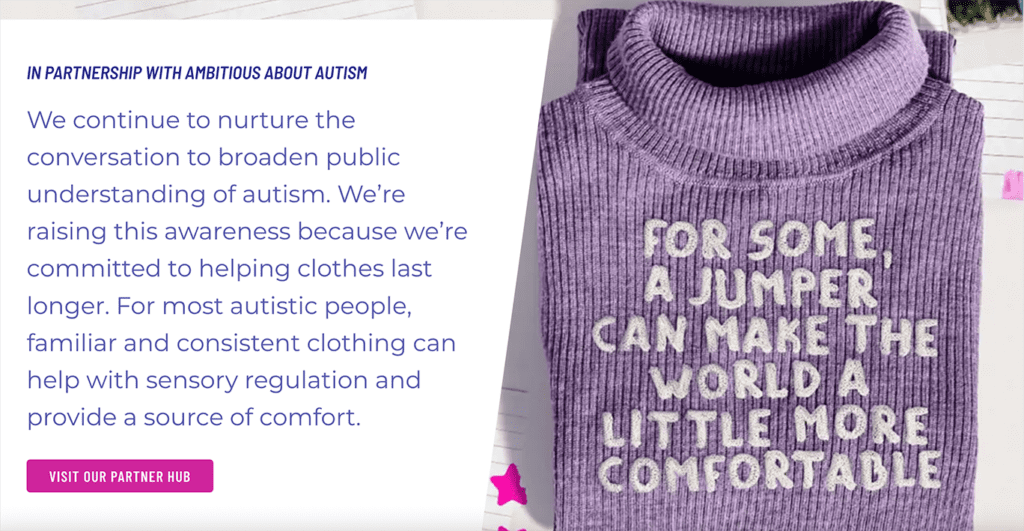
Well, the example we love is Vanish. Vanish did this campaign a couple of years ago, I think, and it was all around … Essentially, it was based off of this insight that families with at least one autistic individual in the family, I believe, was the insight, over-indexed on Vanish products.
And when they dug a little bit deeper, what they discovered was that this is because for many autistic people, obviously, maintaining the quality and the sensory feeling of your clothing is a really important sensory aid. And as such, Vanish products are sort of especially valuable to this community.
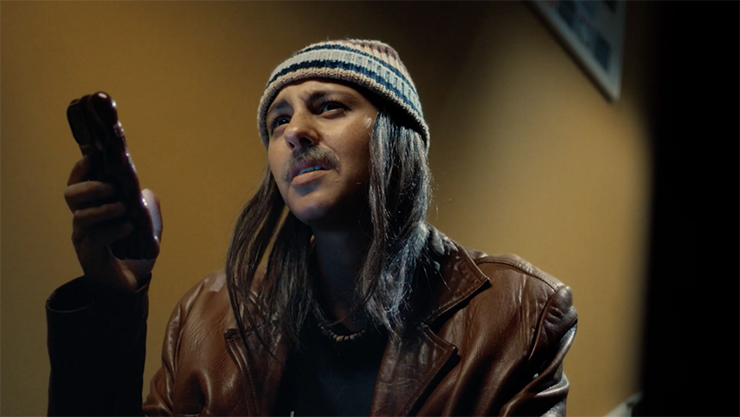
So they use this as an opportunity to create this really fantastic hero film, really. I’m sure you’ll agree, it does quite a good job of normalised representation of what an autistic girl’s life and relationship with her jumper can be like, and also kind of spelling out a lot of that detail and nuance, which we’ve tried to cover that certainly doesn’t get covered by a lot of the kind of stereotypical caricatured portraits of autistic people in wider society at large.
They also did sort of an exhibition featuring a number of autistic women’s clothing in the Oxo Tower, I think, in London. Don’t quote me on that. And it was just a really nice full funnel campaign with loads of support across different channels.
Obviously, loads of money went into it, but it was very well done and also closely linked with an Autistic girls charity. So in terms of the obvious solution I was describing earlier, I think that is the kind of model for how this can be done, but how it can’t be done 100% of the time, right?
Luke Trower:
Yeah.
And I think going off of what you said there, about it being the obvious solution, I think what was great about that particular campaign, going off the things that we’ve already spoken about today, it’s a very 360 campaign. It covers a lot of different aspects. It’s not just about the advert that you’re going to see on the TV or online. It’s about all of the other stuff around it as well and the wider impact that Vanish is having through this campaign.
And I think when we go back to that idea of the obvious solution, I think for me, one of the reasons why companies might not see this as the obvious solution in the first instance can kind of be reflected in that we don’t see more instances of it. If it were truly the obvious solution, then I think more companies would come to the conclusion that this is a good way of doing it.
At the same time though, thinking about the future, and thinking about the impact of this one particular campaign, I, as a neurodivergent individual, wouldn’t want this campaign to become the flag post, to become the blueprint of how to design campaigns surrounding neurodivergent communities.
I wouldn’t want another company to then see this successful campaign and think that was successful, that was inclusive. If we do something like that, then we are also being inclusive and we will also be successful in the same way. Because I think while this campaign is very successful and it is very inclusive, it represents a singular presentation of being neurodivergent. And as I said just before, being neurodivergent has many different presentations.
And so for companies looking to also engage with these communities in the future, I wouldn’t want them to repeat the success of Vanish in the same way because at that point we’re going back to the same presentation of neurodiversity again and again, which is where we’ve gone wrong as a society in the past, in that we’ve built up stereotypes and social connotations around not just being neurodivergent, but what it is to be and how it is to be having different neurodivergent conditions.
And then I just wouldn’t want us to replace one thing with another thing.
Bill Urquhart:
Absolutely.
Luke Trower:
Which is why I would just want this to be a piece of the future rather than the totality of it.
Bill Urquhart:
Yeah. I mean, I totally agree.
I think it’s almost a contradiction, isn’t it? It’s sort of pin Vanish to the mass and say, this is the best you can possibly do because what you don’t want, it’s actually the opposite of what you want is for people to suddenly kind of just try and emulate that and the single depiction of autism as it was depicted in Vanish, although it was done well.
Because intrinsically there are so many nuanced differences between everyone’s experiences. And so you do need to create this kind of patchwork of representation in order for it to be accurate. But as a first piece of the puzzle, and considering how sparse great representation of neurodiverse neurodivergent conditions are in the world, that’s kind of why we’re raising it, I think, isn’t it?
Luke Trower:
100%.
Bill Urquhart:
And I know we kind of touched on that a little bit there, but in terms of society and wider society and the kind of stigma around neurodiversity. I think there’s a really interesting thread to pull out about kind of incidental representation or normalised representation of neurodivergent conditions in wider media and their relationship with the kind of stereotyped representations of neurodivergent conditions, because I think inherently it’s much harder compared to other disabilities to improve perceptions of neurodivergent individuals when normalised representation might go completely under the radar and a kind of stereotyped caricatured representation of them might be the only obvious thing that you can actually point to and say, “That’s representation.”
So in essence, by doing the right thing, you don’t have a strong enough counter to the thing you’re trying to avoid in the future, and therefore it’s harder to kind of turn the ship as it were.
Luke Trower:
Yeah, because essentially you’ve got to go against so much of what society has put out through media for so many years.
I mean, in addition to my autism, I also had a pre-16 dyspraxia diagnosis as well. And I think growing up, when I think about what dyspraxia meant to me growing up, the way I was told it was, was that, “Oh, you’re bad at sport, you’re bad at catching.” And that’s where dyspraxia starts and that’s where dyspraxia ends. That’s what it is as a condition.
When really, when I started to become more and more involved with the disabled community, I started to see the perspectives and the lived experiences of others who were also dyspraxic. And one thing that I quickly saw was that other things in my life that I may have thought had nothing to do with my dyspraxia could probably actually be a presentation of dyspraxia, but because society had told me that it just meant that I was bad at catching, I’d never put those two things together.
And now I can look back at times in my life where I may have struggled with something, or I may have approached something differently to a neurotypical person and I can think, “Oh, well, maybe that was due to the fact of my dyspraxia diagnosis.” But I wouldn’t have known that without speaking to and being involved with the disabled community.
Bill Urquhart:
Yeah.
I mean, it’s a great example of how ableism in society actually affects everyone, including the disabled community as well, right?
So I mean, in terms of where this all leaves us, I know we’ve covered quite a lot today. I suppose what are the key things to remember about this? Where do we kind of land? What do we need to do? What do brands need to do? I mean, what do you want people to take away from this podcast, if anything?
Luke Trower:
I think the main point is that in the past we’ve had very mainstream ways of representing neurodivergent people in society, and those haven’t been very successful by the neurodivergent community. And the way in which we can enact change and we can do things for the better in the future is by working with neurodivergent people, asking them what it is they want to see, asking what needs they have that the company looking to engage with them can address within their marketing spaces and on a wider level as well.
Bill Urquhart:
Yeah. Nice. I think I’d agree with that.
Yeah. I think get involved with the conversation, build some level of understanding and don’t be kind of put off by the fear of getting it wrong, because although neurodivergent conditions are complicated and nuanced and personal, they’re also more accessible than you think.
And it’s having the conversations within the community that gives you access and a kind of right to play in this space. We’d obviously never advocate to just jumping on the bandwagon and doing a campaign like Vanish without consulting the community, seeing what the link is between your brand and the issue or anything like that. So it’s always going to be about involving the community from the start and then punctuating that with moments with the community throughout that process as well.
But yeah, I’d say obviously there needs to be a lot more work done, even within the kind of space we work in.
Representing neurodiversity is something we see much less than other disabilities. And I think that was overarchingly perhaps the reason we did this podcast today. So in part to draw awareness to the issue, but also just to give a little bit of reassurance that it is possible it can be done and don’t be scared to try and engage with them.
Luke Trower:
Absolutely.
Bill Urquhart:
So I mean, obviously we work with brands all the time to provide this kind of handholding in many ways, through the process of maybe never having engaged with it before, all the way through to building that internal confidence where you feel like you have that right to play in the space, you can build a campaign with us at your side that really kind of hits the mark and is going to resonate as intended and really strongly with your desired community, and just build your inclusion efforts into the future.
It’s always going to be a matter of evolving the narrative and the narrative itself, and why society does evolve as well. It’s not a kind of one and done thing that you can just check off a box.
It needs to be something that … And this is what we basically assist with is working with brands over time to help them ride this wave, and to make sure they’re doing everything they can to capitalise on ultimately the 24% of the population who are disabled, which in society is a massive thing to turn the dial, even if you were just concerned about numbers.
Bill Urquhart:
Well, thank you very much for watching. I know me and Luke had a great time talking about that. Hopefully gave you some new information you maybe hadn’t been exposed to before, at least a new conversation.
We kind of talked about obviously the what of disability, why we’re talking about it, both in terms of a kind of personal sense, but also in the kind of wider society and the underrepresentation we see even at Purple Goat.
We spoke about incidental representation and whether there is an obvious solution. We obviously both had different opinions about what obvious counts has there, and then just looked at representation as a whole and whether stereotypes and depictions of neurodivergent individual society are part of the problem, which of course they were.
So thank you very much. Please like and subscribe and follow us in all of our relevant channels and thank you very much to ID Studio for hosting us today. It’s a really great accessible studio space and we’re very grateful. So if you need a podcast studio, go and check them out.
Thank you.