The Ultimate Inclusive Content Marketing Guide: Download Now
Learn how to create content that reaches your widest audience yet.

In a dynamic marketing landscape where diversity and inclusivity are key, there remains a crucial audience often left in the shadows: disabled people.
This blog post, ‘Ensuring You Reach 100% of Your Target Audience’, uncovers the missed opportunities that lie in not engaging this vital demographic that makes up 24% of the UK population. This blog will outline five key questions to ask yourself when considering your target audience, explain why a target audience is important and how including the disabled community can benefit consumers and brands!
Let’s start with the basics. A target audience refers to a specific group of people that a business or organisation aims to reach with its products, services, or messages.
Identifying a target audience is necessary for effective marketing and communication strategies. By understanding the target audience’s demographics, interests, and needs, businesses can tailor their offerings and messages to resonate with them, increasing the chances of success and a consumer making a purchase!
This is important for several reasons:
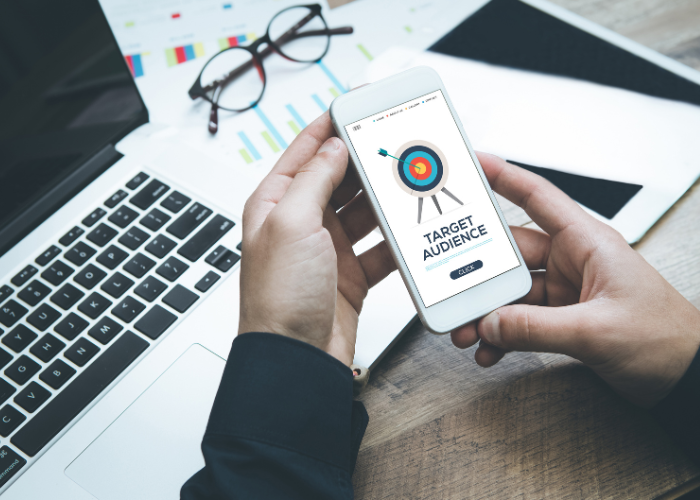
Including disabled people in a target market is important for both consumers and businesses. By considering the needs and preferences of disabled individuals, businesses can ensure that their products, services, and messages are accessible to a wider range of people. This helps create a more inclusive society and opens up new market opportunities.
Plus, the collective spending power of disabled consumers is often hugely underestimated by businesses and service providers. Therefore, ensuring a target market includes Disabled people can greatly enhance a business’s customer base – it’s a win-win for everyone!
Understanding and reaching your target audience is a cornerstone of effective marketing. But, when it comes to inclusivity, particularly for people with disabilities, are we truly tapping into the full potential of our audience? The simple answer is that you can ensure you reach ALL of your target audience by making your campaigns inclusive and accessible. But how do you do that?
Well, reflecting a diverse range of people, gaining feedback from the community through focus groups, using data-driven results from A/B testing, using inclusive language and conducting unbiased research are good places to start.
To make it easier, we’ve compiled five critical questions designed to challenge and refine your approach, ensuring that no part of your audience is overlooked. By addressing these, brands can foster a more inclusive and comprehensive marketing strategy that resonates with every individual they wish to reach.
So, let’s dive in.

In today’s diverse world, ensuring your marketing campaigns are accessible is not just good practice; it’s essential. Here are five questions to ask yourself when marketing your brand to ensure that you reach the largest possible percentage of your target audience.
Accessible marketing campaigns and adverts respect and acknowledge the variety of ways people interact with content, considering factors like visual, auditory, and cognitive differences. You can make your marketing material accessible by using accessible formats, which may include:
Using these accessible formats will enable your campaigns to communicate effectively with a broader audience, strengthen your connection with potential customers, and demonstrate that you are a brand for everyone!
Your marketing campaigns have the power to reflect the rich diversity and unique needs of your target audience so it’s essential to ask yourself: do your campaigns mirror the myriad of faces, voices, and experiences present in our world? Consider disability, ethnicity, gender and gender identity, sexual orientation, religious/spiritual beliefs and socioeconomic status.
For example, say you are launching a marketing campaign for a deodorant-based product, and your target audience is male athletes in their mid-twenties…
Could you weave in the story of a male Paralympian in his mid-twenties to represent those with disabilites? Or feature an athlete who is well-known in a religious or spiritual community to represent those with certain belief systems?
You can weave the stories of people from all walks of life, reach multiple segments of your target audience and amplify the impact of your campaigns by reflecting the diversity of people in society. However, it is important to represent people authentically rather than make assumptions about how they want to be represented.
For example, studies have shown that marketing campaigns targeted at ‘pre-defined ethnic groups’ may ‘ignore the variety within each ethnic segment.’ This stereotyping may lead to consumers feeling even more excluded and misunderstood than before! This may translate into other areas of diversity, such as disability e.g. if a brand chooses to represent the majority of disabled individuals as being wheelchair users, then those who are blind, deaf or have invisible disabilities may feel unseen, unheard and excluded.
Interesting fact: did you know that only 8% of the Disabled community are wheelchair users?
So, mix it up and use a variety of representations throughout your marketing campaigns!
It is important to test your marketing campaign before launch, as this can provide valuable feedback that will make your campaign even more successful!
You can test your campaign in the following ways:
At Purple Goat, we often work with clients on research projects to help them understand how the Disabled community feel about their brand and products, and the results are always really helpful and valuable to the brands.
Once your campaign is launched, you can continue to conduct further target audience research by using social platforms to monitor reactions and comments, plus data analytic tools to track engagement, click-through rates, and other key performance indicators.

Using the correct language allows people to connect with your campaign and trust that you understand them as a person, not just a consumer. In fact, it has been shown ‘that people are more likely to consider, or even purchase, a product after seeing an ad they think is diverse or inclusive.’ Some examples of how to use inclusive language include:
But what about unconscious bias? What is it, and how can you avoid it?
Unconscious bias in marketing refers to the unintentional and automatic biases that influence marketing decisions and strategies, often without the marketers’ awareness. These biases can stem from a person’s background, cultural environment, and personal experiences. This might result in only targeting certain demographics, using stereotypical representations, or overlooking the needs of diverse groups.
You can avoid unconscious bias by ensuring your marketing team has a diverse range of people with varying backgrounds and perspectives. You can also provide regular DE&I Training for staff members, use data rather than personal opinions to drive decisions and ask for feedback from a range of audience members.
For example, if you base your target audience on current customer sales and your website is not accessible, you may not realise that there are Disabled people who would love to buy your products. Therefore, through sampling bias, your data may not be giving an accurate representation. You may also experience research bias from factors such as:
Let’s be honest: you’re never going to reach 100% of your target audience, but if you ask yourself the above five questions and use the steps strategically, it is likely that you will see increased engagement, more sales and higher customer satisfaction and retention.
Inclusivity is something that can be weaved into day-to-day marketing campaigns, and it’s probably easier to do than you think! Thread inclusivity into your big thinking strategies and watch your consumer base grow, your inclusivity confidence increase and your engagement and conversion rates soar – feel good in knowing that you are contributing to a more inclusive and cohesive version of society.
Here at Purple Goat, we are the only disability-led, inclusive marketing agency in the world, with 50%+ of our staff from the Disabled community, bringing both our marketing expertise and our lived experiences of disability to all our work with clients. Feel free to read our story, follow us on Instagram, or learn more about our inclusive marketing services!